
Bangkok for Digital Nomads
Thailand's capital Bangkok is one of the main travel hubs in South-East Asia. Once upon a time it was my favourite place in the world. It's a big city, so it can take a little time to find the parts of it you like, but once you do it's such a vibrant and energetic place that you'll never be bored again. Accommodation is pretty cheap, there are endless social opportunities, the food scene is incredibly varied, there are a couple of nice parks, the transportation network can take you anywhere and the Internet is fast. What more could you ask for?
In Thailand, all roads lead to Bangkok. All railway lines start in Bangkok and most international flights come to Bangkok. If you come to Thailand, you're almost certainly going to come here whether you want to or not. In response to a lull in post-pandemic tourism, the government really pushed to increase the tourist numbers in Thailand by removing a lot of red tape. In 2022, for example, 11.15 million foreign visitors came to Thailand. By 2024 it was over 35 million, and as almost all of them found themselves in Bangkok at some point, when you're in Bangkok you can really feel it. And I don't just mean a huge increase in the number of gormless foreigners walking around in flip-flops. You can feel this quantity over quality attitude in the services.
When there are 35 million people coming here each year, there's little incentive for hotels to try to get repeat customers. If they have a shitty rating on Agoda, it's not really going to affect them much because there are so many other potential customers. Should we provide a good service, or should we cut costs as much as possible? Sadly, many now choose the latter.
I used to like what I consider to be the city centre (the area around Asok BTS) and for my first few stays here as a digital nomad, that's where I stayed. Now I recommend avoiding it. Go to the outer districts with less tourism, because in the touristy areas it's become overwhelming.
And while I once loved Bangkok to the point that I lived here for six years, lately I've fallen out of love with it a bit. It attracts so many foreigners that show no interest in learning the language or local customs, and subsequent businesses to cater to them, that it's rapidly becoming little more than a generic tourist city, particularly in the centre.
Take from that what you will. If you're a digital nomad who wants things like in their home country, but cheaper, then you might love it here. But on my most recent visits to Thailand I've regretted staying in Bangkok as long as I have done. I much prefer spending my time in the provinces.
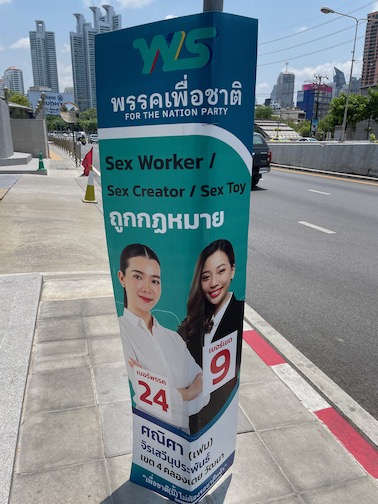
One of my stays here was in the run-up to an election. There were some interesting campaign promises.
How affordable is Bangkok?
Bangkok is more expensive than the rest of Thailand, but still very cheap compared to western countries. It's roughly on par with Eastern Europe in terms of living costs. Expect to pay upwards of 900 baht per night for a comfortable room, a meal in a western restaurant will cost around 300 baht (local restaurants are much cheaper), and a small bottle of beer in a bar is about 120 baht.
Paying for things in Bangkok
If you don't have a Thai bank account, cash is the primary method for paying for things in Bangkok (and all of Thailand). While large businesses like supermarkets accept card payments and don't charge a fee, many smaller businesses that do accept cards tack-on an extra fee (up to 10%). Most smaller businesses, including all street vendors, don't accept card payments at all, so get used to carrying cash.
Thai ATMs charge a withdrawal fee for using foreign cards. The fee varies by bank, but can be up to 350 baht per withdrawal. It's therefore more economical to withdraw large amounts at each withdrawal, although you'll find that ATMs have withdrawal limits, usually 20,000 baht per withdrawal.
It's also worth being aware that Starbucks has now gone cashless. I've not been anywhere else that explicitly doesn't accept cash, but we're now at the start of Bangkok's cashless revolution, so it's worth carrying a card with you just in case.
That's the bad news. The good news is that if you have or can get a Thai bank account then things are much, much easier.
Not many businesses in Thailand accept card payments, but every single business including street vendors accept payment by QR code. They will show you a QR code that you scan with your bank's app, and what this does is setup a direct transfer. There is no fee to you or to the recipient, so you can pay any amount to anybody in this way.
Furthermore, withdrawing cash from your Thai bank's ATMs is free of charge, and if you're with a major bank you'll find them all over the place. Using another bank's ATM incurs a small fee but the amount is negligible.
In short, if you're able to get a Thai bank account then you'll find paying for things to be really easy, you'll rarely have to pay with cash as you can pay for everything using your phone, ATM withdrawals are free, and you can even do cardless ATM withdrawals. If you can't get a Thai bank account, then you'll be mostly paying with cash, and you'll pay each time you withdraw from an ATM.
If you're in Thailand with a work permit, then opening a Thai bank account is pretty straight forward. I still use the bank account I opened in 2012 when working here. If you're not here on a work permit, then it used to be possible to open a Thai bank account, but after a crackdown by authorities, it's now much harder.
Getting around Bangkok
The first thing I'll say, is that if you can stand the heat, then Bangkok is a deceptively walkable city.
You might not think it at first given the pollution levels, how hard it can be to cross the road, and the amount of motorcycles that ride on the pavement. Once you get used to that, there's not really anywhere in the city you can't get on foot.
For those who aren't so inclined, these are your options.
Taxis
Hailing a taxi on the street is often going to be your best choice for going anywhere in Bangkok. Taxis in Bangkok are usually either pink, or yellow and green, but you will find some of other colours (including blue or orange). If the taxi is available, then visible through the bottom-right of the windscreen you'll see the illuminated text 'ว่าง' (pronounced "wâang", it means vacant / available).
Taking a taxi isn't quite as straight forward as in some other parts of the world. Once you've flagged it down, I'd suggest talking to the driver through the window before getting-in. You need to communicate where you're going - if you can speak Thai this is obviously much easier, but most taxi drivers speak some basic English, although beware that showing where you want to go on a map isn't always helpful. Many taxi drivers in Bangkok can't read maps but their pride stops them admitting this, so they'll nod like they understand where you want to go, and it's only once driving you'll realise they don't have a clue.
As well as needing to establish your destination, you also want to be clear how much the journey will cost before getting into the taxi. The driver should use the taxi's meter. This charges you an initial fee of 35 baht, then 6.50 baht per additional kilometre (for the first 10km until the rate increases slightly). Given the traffic in Bangkok, there is also a time charge, where if the taxi is not moving at more than 6km/hour, the meter will increase by 3 baht per minute. Note that fees for going on toll roads are paid by you, as are fees from the airport.
If you can speak Thai, or if you can at least pass-off as not being a tourist, then you won't ever really have issues with taxis. They are well known to take advantage of those that don't know any better though.
The first thing you're likely to encounter is that they'll try to use a set fare rather than the meter. This will typically be higher than the meter rate, so insist that they use the meter and make sure they agree before getting into the taxi. The Thai word for 'meter' is conveniently a loanword from English, so just say 'meter' in a Thai accent (such as "mee-terr") and they will understand.
The other issues you might encounter are drivers taking longer routes than necessary, meters having been manipulated to charge a higher rate, the meter mysteriously breaking mid-journey, or the drivers adding-on erroneous fees at the end of the trip. These are much rarer scams, and in the event that you encounter one, the simplest solution is to usually just swallow your pride and pay, and if you're so inclined, report the driver afterwards.
Every once in a while a news story pops up of a taxi driver getting into an argument with a tourist (just Google something like 'Bangkok taxi driver attacks tourist'), and the tourist rarely wins.
Motorcycle taxis
You'll see motorcycle taxis all over Bangkok. They're the riders that wear orange vests, and they're used by Thai people to generally cover quite short distances.
As all Thai people are allergic to walking, motorcycles are necessary to get them to the nearest MRT or BTS station. A fare for such a trip is often just 15 or 20 baht. For such short distances I always walk, so I rarely use motorcycle taxis. However if you need to get somewhere further afield quickly, they're the best way as they're far less affected by Bangkok's heavy traffic than cars, buses, taxis and tuk-tuks are.
Going outside of their usual territory you're going to have to negotiate the fare with the rider as there won't be one pre-set.
Ride-hailing apps
Grab and Bolt are the two most common ride-hailing apps in Bangkok. Grab is usually a bit more expensive, but it's what I typically use. It's also usually a bit more expensive than taxis hailed on the street, but you get the convenience of having a car pick you up from your location, and of also not having to interact with the driver.
I've never had any issues beyond the car taking a while to arrive to pick me up, or drivers accepting rides then messaging me asking to cancel. Once I've got in a car, it's always got me where I want to go without a problem.
Tuk-tuks
While they're still commonly used by locals in other parts of Thailand, in Bangkok tuk-tuks are mostly used by tourists for the novelty of taking a tuk-tuk. They have no meter like taxis do, and so you need to negotiate a price before getting-in, and it usually won't be cheap.
MRT and BTS
By far the easiest way of getting around Bangkok, the MRT (the subway) and the BTS (the skytrain) have every sign and announcement translated into English, and every worker behind the counter speaks English. That's the good news. The bad news is that, despite connecting together and appearing part of the same service, they're actually run by different companies, and therefore journeys on each require different tickets or different pre-paid cards.
When going to quiet stations, if you don't have a pre-paid card then buying a ticket is easy, either at the counter or at a machine. But if you go to Sukhumvit station during evening rush hour, queues can be huge so I recommend getting a pre-paid card just to save you the trouble.
On the BTS this is the Rabbit card. The MRT now accepts tap-to-pay with visa cards (but not Mastercard), but if that's not viable then buy an MRT pre-paid card as well.
While it doesn't yet cover the entire city, the network is expanding very quickly. From when I last lived in Bangkok in 2018, there is now about three times as many operational stations, with more under construction, so it'll soon get you anywhere in the city.
Taking the bus
Taking the bus in Bangkok is much easier than it used to be, but it can still be a little unfriendly to foreigners.
It's easier because apps like ViaBus (AppStore / Play Store) mean that figuring-out which bus to take can be done in English, on your phone, as opposed to wandering around Bangkok and writing down which buses stop at which bus stops, which is what I had to do when I first lived here.
To take the bus, you get on at any door and go and find a seat if one's available. The conductor will approach you. On non-air conditioned buses, there's a flat fare no matter your destination. This can vary slightly, but will typically be around 10 baht. If you're unsure and don't want to ask the fare, just hand over a 20 baht note and you'll get change.
On air-conditioned buses the fare varies by destination, which is a bit annoying because I quite like to get on buses and just see where they go, and you also face the occasional embarrassment of getting on the wrong bus and stating a destination that it's not going to.
Assuming you say a destination that actually exists, the conductor will tell you the fare (usually less than 25 baht). Don't expect the conductors to speak any English, so if you don't know Thai then just hand over a couple of 20 baht notes and see how much change you get. Exciting.
Buses go to all corners of Bangkok very cheaply, and are probably the funnest way to travel, so it's worth getting used to how to take them, but they can be a little intimidating at first.
Is it easy to get by with English in Bangkok?
In the tourist areas, yes, very easy. The further you venture outwards, the less English is spoken, but this is a city with such a high number of tourists and expats that in very few places is it going to be uncommon to see foreigners, so at the very least people will be used to dealing with non-Thai speakers, even if they don't speak English.
Is Bangkok safe?
Any big city has its dangers, but I feel far safer in Bangkok than I do in London, for example.
Given the number of tourists that come here, tourist scams are common. Whether that means taxi drivers turning-off the meter to charge you a higher fare, bars adding imaginary drinks to your tab, or people pretending that the Grand Palace is closed to take you to a gem shop, the more like a tourist you appear, the more that you'll encounter them. And many tourists don't do a good job of hiding that they're fresh off the plane.
Once you lose the vibe that new arrivals carry, you'll encounter far fewer scams, and if you learn to speak Thai they all but disappear. While you're going through these growing pains, keep your wits about you.
I have been told first-hand accounts of violent crimes in Bangkok (I had a Thai friend who was robbed at knife-point), but these are very rare. I've never experienced them personally, and I'm an idiot. I walk down dark alleys at all hours of the night.
Who is Bangkok suitable for?
So long as you're someone that likes big cities, then Bangkok really does have something for everyone. Whether or not you can find what you're looking for is another matter. Of note, Bangkok only has a small number of parks. If you're not used to big cities, or if you're used to European cities with lots of green space, then the lack of greenery here can be a real downer.
It's a very easy city to be sociable in. There are many events on Meetup, and there are co-working spaces, so having a social life is easy here.
Some parts of the city, such as around the Sukhumvit area or Khao San Road are renowned for being tourist hot spots. Other areas like Thong Lo, On Nut and Sathorn still have a heavy foreign presence, but more with expats and longer-term visitors. Other areas don't have many foreigners at all.
The areas with a lot of foreigners are rapidly and regrettably transforming to resemble Europe more than Bangkok, with coffee shops and restaurants serving western food from English menus and English-speaking staff. You'll also find prices in these areas to be higher than elsewhere. But if you're looking for a local experience, this is still somewhat possible in the outer areas of the city (although if you're looking for a local experience, I don't know why you'd stay in Bangkok at all).
Is the tap water drinkable in Bangkok?
No, but it's not a huge issue.
When the water leaves the plant in Bangkok it's drinkable, but the pipes in Bangkok are old and broken, so by the time it reaches your tap, especially if you're staying in an old building, then it's not considered safe for consumption, but don't go overboard.
I've used it for many years to brush my teeth with and to cook with and never had an issue. I've never checked with the bar/restaurant I'm in if the ice has come from the tap, and I even had a friend who regularly drank the tap water, and last I heard he was still alive.
Bottled water is cheap in Bangkok (a six litre bottle is 41 baht in 7-11) and you'll see water filter machines all over the place where you can fill-up your bottles for 1 baht per litre. There's also a growing number of water fountains around the city where you can get drinking water for free.
Where to buy tea in Bangkok
One of my pet peeves about Thailand as a whole, including Bangkok, is that it has some amazing local teas that, when you know where to find them, are really great value. Unfortunately none of the major supermarket chains stock these, opting for overpriced imported teas instead, so whenever I go somewhere new in Thailand I have to scour the city looking for a shop selling local teas.
In Bangkok the best place I've found is the Vegetarian Society in Chatuchak. It's a long-standing little complex that I used to visit from time-to-time when I lived nearby, that primarily offers very basic, but very reasonably priced vegan food. As part of this complex is a store that among other vegan products, stocks lots of local Thai teas, typically priced at 20 baht for 20 tea bags. If you eat a lot of nuts and seeds this is also the cheapest place I've found in Bangkok to buy them.
The other places I've found in Bangkok selling such teas are the Gateway Ekkamai branch of MaxValu, which has a small selection of the same teas that you find at Vegetarian Society, although not really living up to their name, they charge 35 baht for 20 tea bags. They seem to only be sold at this branch - I've checked other branches of MaxValu and not found them. And the other place is ข้าวกล้อง, a little health food shop in Udom Suk.
I'm sure there are more options in Bangkok to get local tea, but I've never found them.
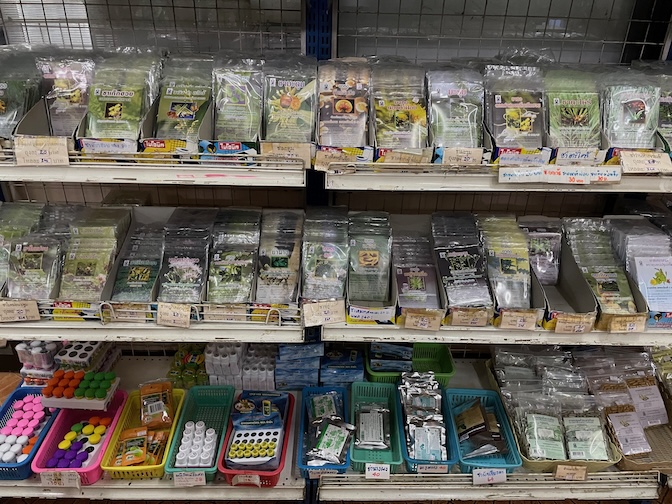
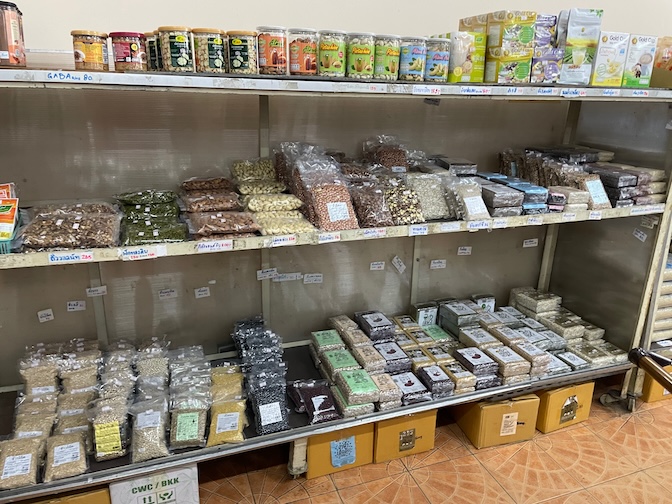
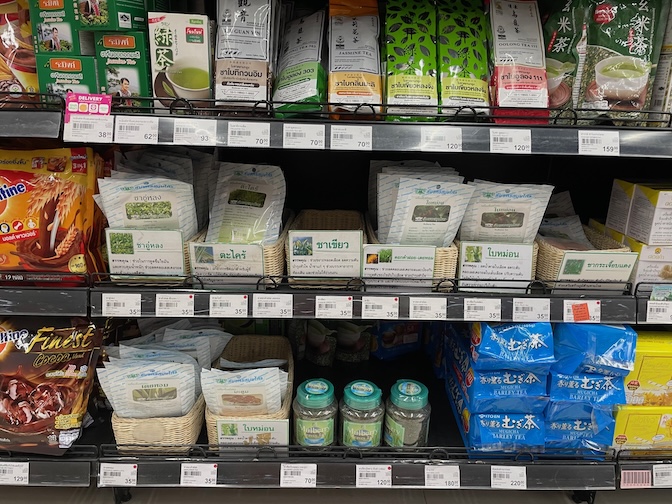
The Vegetarian Society in Chatuchak is by far the best place in Bangkok I've found to buy local teas. Worth noting that they close at 2pm everyday, so get here early.
Things I don't like about Bangkok
There are two main things that I don't like in Bangkok. The first is that it has some of the worst traffic in the world, which is an annoyance in itself if you ever want to take a bus or a taxi to get somewhere. But a consequence of the endless idling cars is that it's a quite heavily polluted city.
The second is the sheer volume of tourists making large areas of the city unpleasant and rather soulless as businesses switch to target these free-spending foreigners. I now actively avoid areas that I once considered pleasant.
Being sociable in Bangkok
There are few places in the world that I've found it easier to be sociable than Bangkok. The Meetup community in Bangkok is really active, so you can find an event that you want to attend pretty much seven days per week. And unlike some cities, it's not limited to drinking. There are running clubs, meeting people over coffee, yoga, and language exchange (where people actually do speak different languages). But you can also find plenty for going out and getting shit-faced. And for whatever reason, I've found that the people I've met at Meetups in Bangkok are more open to staying in touch and being subsequently social than in other places in the world.
While I suggest searching for exactly what it is you're looking for, some of the groups that I've attended and can vouch for are the Lumpini Running Club Bangkok, which does a relaxed evening run in Lumphini on two evenings per week, often going out for food or drinks afterwards. The Bangkok Cultural Exchange Meetup runs language exchange events that actually are about exchanging languages, which is weird, because language exchange is normally just a code-word for getting drunk. The Bangkok Vegan Meetup hosts sporadic events at various vegan eateries in Bangkok, so if you're vegan it's a good chance to try a restaurant that you might not go to otherwise and meet some nice people at the same time. Fun Friends Bangkok hosts a weekly Meetup in a coffee shop, presently in EmQuartier, that is a relaxed way to sit around and chat to some new people.
While I've primarily used Meetup for social events in Bangkok, it's become a lot less user-friendly lately, so searching for events on Facebook can also yield some good results.
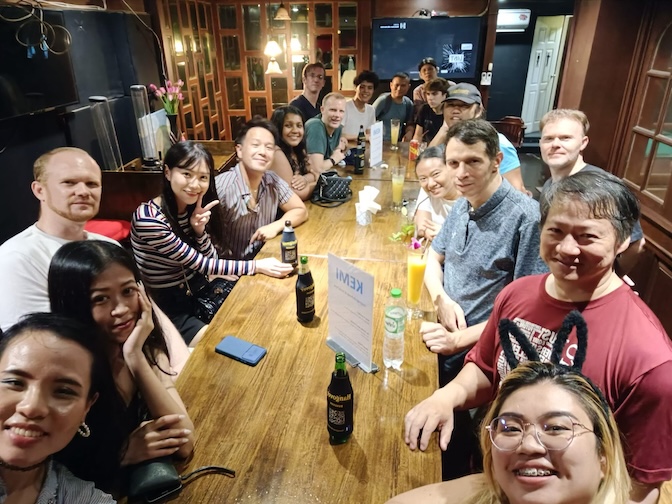
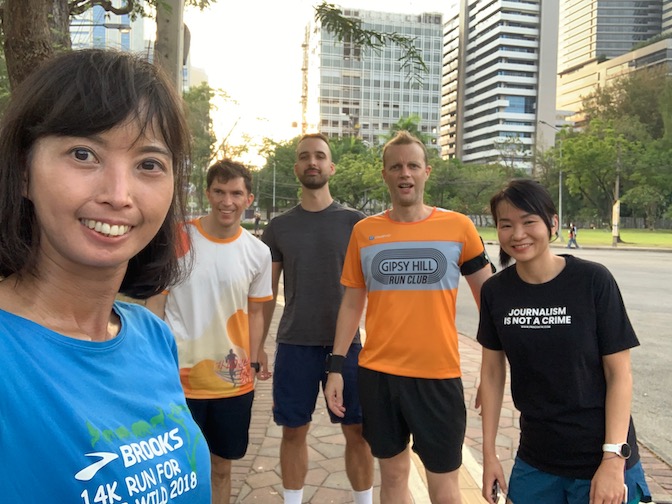
I'm really good at showing up to places and getting drunk. I'm really bad at remembering to take any photos, so I don't have many. This was at the 'Language Exchange and Activities and Social in Bangkok' Meetup that's no longer on Meetup, but still holds events via their WhatsApp group occasionally.
Where to run in Bangkok
Bangkok has a small number of nice parks to run in, but beyond that it's not a running-friendly city. The traffic, pollution and number of people in the city centre means running along the pavements is pretty unpleasant (although some people do), so I'd suggest getting accommodation close to a park.
Benchasiri Park
Benchasiri Park is a small park next to Emporium shopping mall. It has a roughly 700m circumference, so for a 5k run it's seven laps. Doing any more than that becomes a little cumbersome, and it can get busy in the mornings and evenings with a couple of annoying bottlenecks in the circuit. However, in the daytime it's quiet enough that you can have a pleasant run. There are toilets in the park and three different shops to buy water/snacks at, as well as water fountains, so if you're still adjusting to the heat in Bangkok, this is a good place to start.
Lumphini Park, Benchakitti Park and The Green Mile
The most obvious place to run in Bangkok is Lumphini Park. The primary reason I lived in Sathorn for three years is that I wanted to be close to Lumphini Park, so I've really got my laps in here.
Although you can make your own route through the inside of the park if you want to, there's a very established running lap that goes around the outside that is slightly over 2.5km. It's a wide track the whole way around, so even in the mornings and evenings when it gets busy, you still have the space to go at a good pace. As always, I recommend running in the daytime when you'll be the only one running, but for some reason no one else likes that.
Closer to Sukhumvit you'll find Benchakitti Park. I use the term 'park' slightly loosely, because it's more a lake with a track around it. The track is shared with pedestrians who will inevitably veer into the running lane, but other than that it's pleasant enough. At roughly 1.8km, each lap of the lake is just over a mile.
Until quite recently that was the extent of Benchakitti Park, but it's now expanded to be roughly three times the size with the addition of the connected Benchakitti Forest Park. In the south half of the forest park there's a road that's suitable for runners, and above the park is a skywalk that's also good for running along. The rest of the park is a bit zig-zaggy and hard to see where you're going, so not especially running-friendly, although fine if you go slowly.
That's all well and good, but wouldn't it be wonderful if you could run between Lumphini Park and Benchakitti Park without having to cross any roads? Well duh-duh-dum duh-duh-dum, you can.
A little known feature of Bangkok is the raised walkway colloquially known as 'The Green Mile' (or known on Google Maps as the Benchakitti-Lumpini Park, Treetop Walk Bridge). In the past accessing it from the Sukhumvit end was near impossible unless you knew what you were looking for, but with the development of Benchakitti Forest Park it's now much easier to find.
The Green Mile is basically a long walkway open only to pedestrians and cyclists that connects the north-west corner of Benchakitti Park to Thanon Witthayu (Wireless Road), a very short distance from Lumphini Park. So you can go to Lumphini Park, Benchakitti Park, and Benchakitti Forest Park without having to cross a single road or worry about a single car or motorcycle.
A possible route is to start at the south end of Benchakitti Park, do a half-lap before going onto The Green Mile, running to and then doing a lap of Lumphini, before going back onto The Green Mile, turning-off halfway along onto the Benchakitti Forest Park Skywalk, running down that to the end, and then finishing back at the south end of Benchakitti Park. That route is roughly 7.7km, but you can add-on as you need by doing additional laps of any of the three parks that it takes you through.
It's not really a route to do for speed, largely because The Green Mile includes some steps, but other than that it's a lovely route to run.
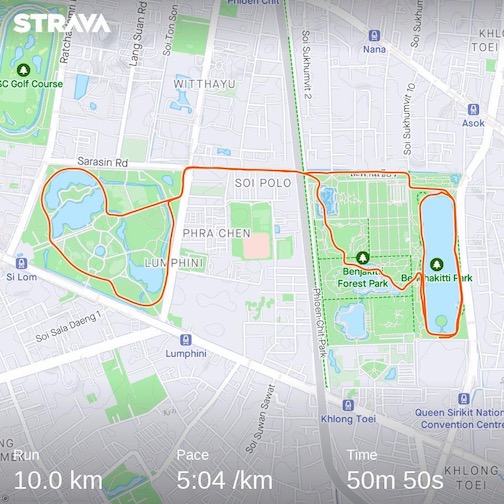
To make it a bit clearer what I mean, this route does a lap of Benchakitti Park (on the right), a lap of Lumphini Park (on the left), goes across The Green Mile (the horizontal line at the top), and goes down the Benchakitti Forest Park Skywalk (the zig-zaggy diagonal line from halfway along The Green Mile).
Chatuchak Park, Queen Sirikit Park and Wachirabenchathat Park
North of Bangkok city centre you'll find these three parks. Apart from a small, easy-to-cross road separating Chatuchak Park from the other two, they're interconnected, so I don't really understand why they're not considered one big park.
Chatuchak Park is a long, thin, very beautiful park, with its only stain being that it's right next to a main road. It has an anti-clockwise running route that's marked by arrows that's 3km per lap. In the daytime this is sparsely populated, but come sundown it can get very busy, and there are a couple of bottlenecks.
Wachirabenchathat Park and Queen Sirikit Park are bigger. They too have established running routes that most people follow, but being wider than Chatuchak there are some divergent paths you can veer onto if you want to go somewhere different.
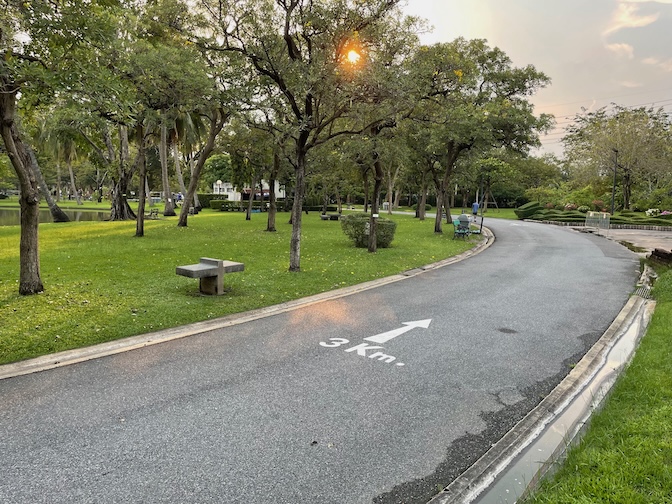
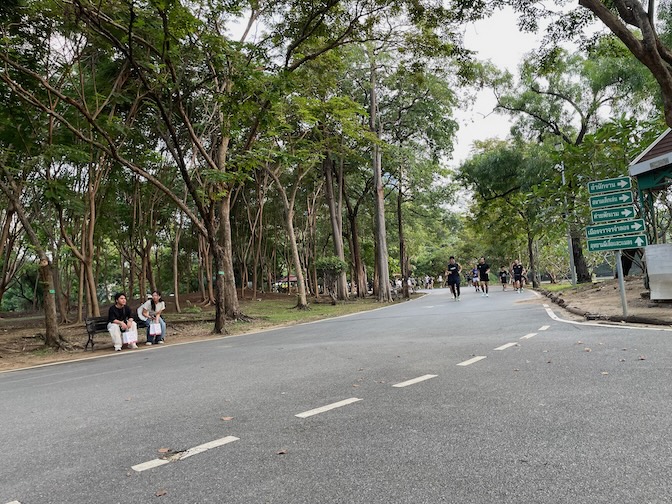
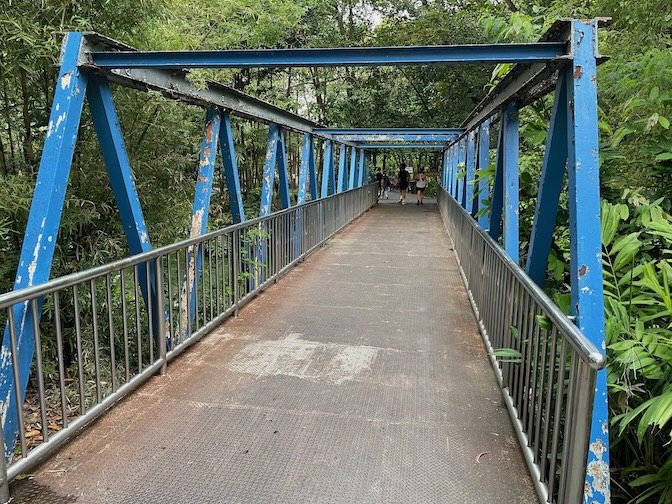
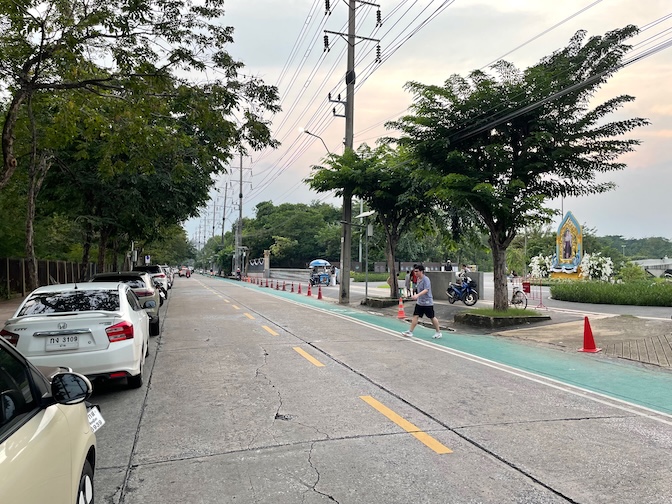
Chatuchak Park has a clearly-marked 3km loop going around the park that all runners follow.
Getting vegan food in Bangkok
When I first lived in Bangkok in 2012, being vegan was a pain. There were very few vegan-friendly restaurants, and none near to where I lived. In the thirteen years since, Bangkok has morphed into one of the most vegan-friendly cities in the world. It's overflowing with vegan and vegan-friendly restaurants now.
I'll recommend my favourites below, but honestly, ignore them. The vegan-scene here is ever-changing. My favourite restaurant from last year now sits as a pile of rubble, and at least three others I've recommended in previous iterations of this article no longer exist. I don't think that's my fault, but I could recommend a hundred different restaurants and they'd all be worthy, so find what you like rather than listening to me.
With that being said, if you're really too lazy to do your own research, my personal favourites are...
May Veggie Home
I'll always have a soft spot for May. They were a vegan restaurant in Bangkok before it was cool, and one of the only ones that existed when I first moved here in 2012.
At that time they were in their Asok location, a short walk from both the BTS and MRT so it was amazingly convenient. They've since relocated their main branch to 10 mins down a soi next to Punnawithi BTS station, which is far harder to get to. May Veggie Home Express, which has counter-service, just six tables, and slightly lower prices is a lot more convenient, but the slimmed-down menu doesn't give you the full experience.
Even so, I recommend both branches. They're cheaper than equivalent restaurants in Bangkok (like Veganerie), and the food is really good.
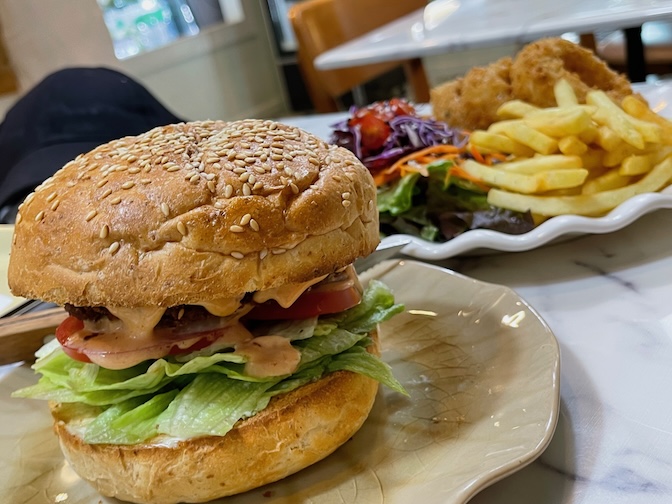
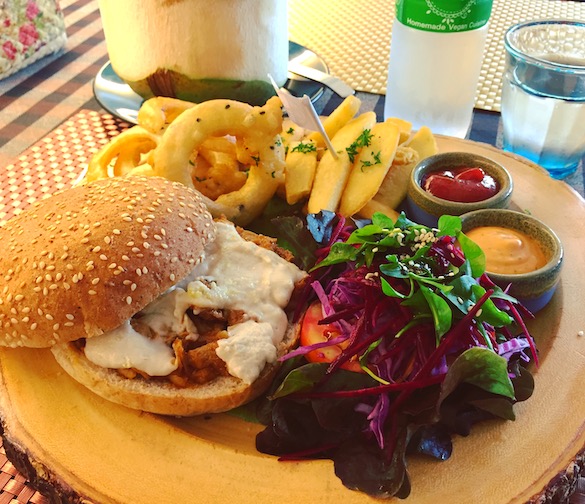
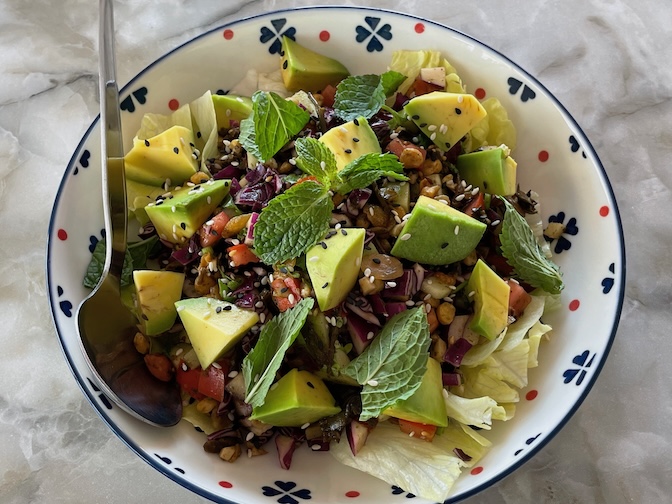
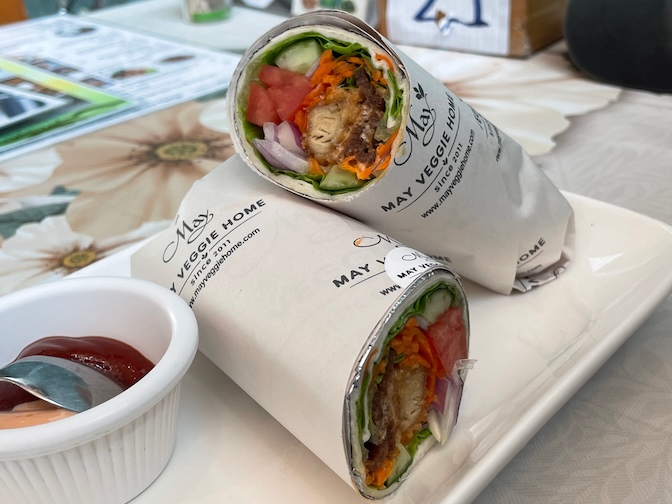
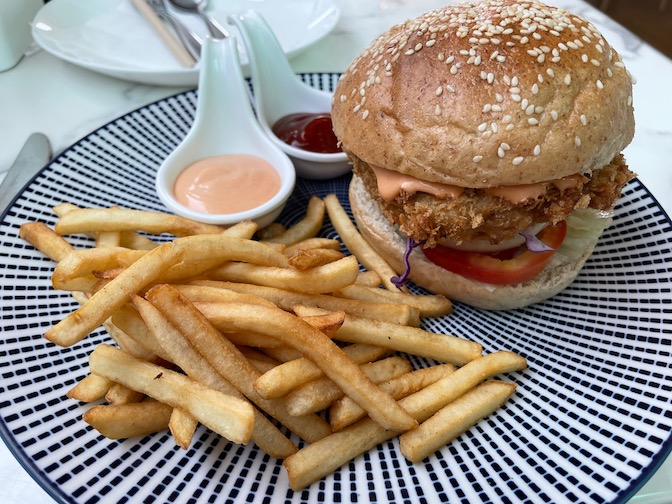
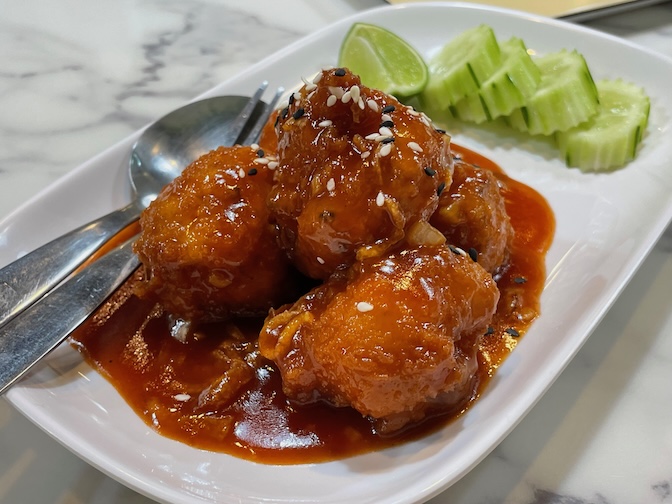
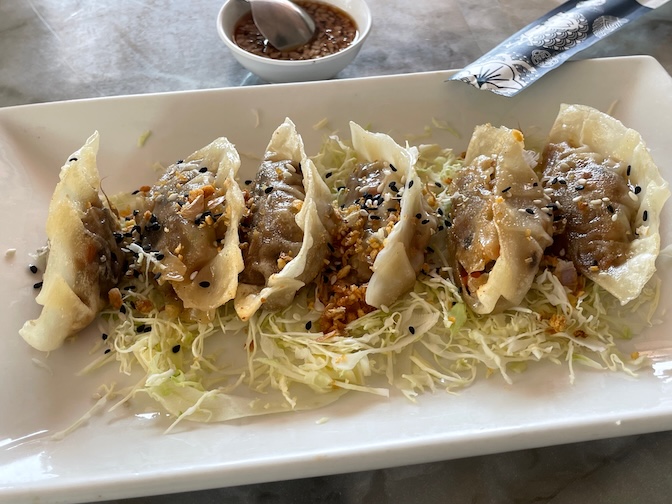
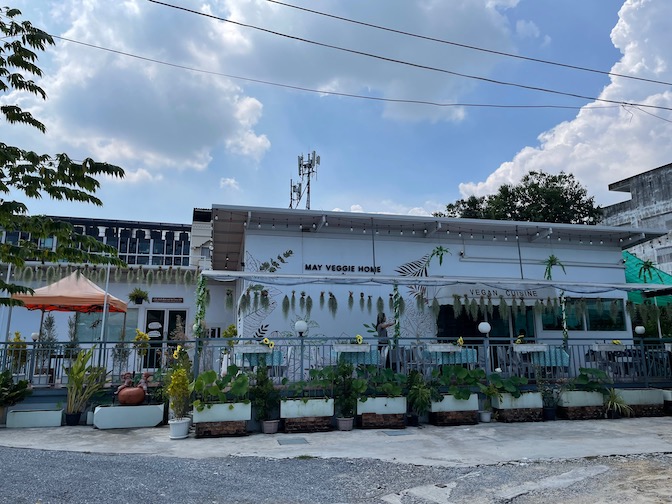
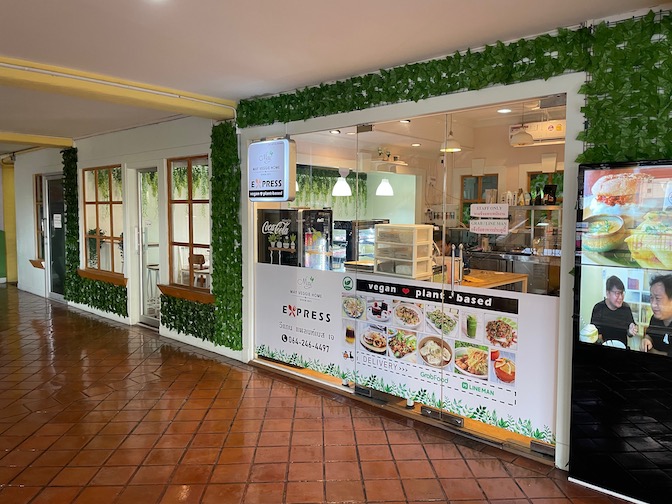
If you go to the Express branch, the veggie burger on its own will cost you 149 baht. However, for an extra 99 baht you can get fries, onion rings and salad so big that they have to put them on another plate. You will not go hungry.
Veganerie
When I first went to Veganerie in January 2015, it was a solitary vegan cake shop on the 4th floor of the not very desirable Mercury Ville shopping mall. They've since expanded to what I can only describe as a vegan empire in Bangkok.
Veganerie Concept behind Benchasiri Park was the first branch to go beyond desserts, and to this day is my favourite branch. They've now opened premises in Silom, Nana, Siam Paragon and Em Quartier among others. The Mercury Ville location is no longer there.
The menu is a nice mix of healthy dishes like smoothie bowls and salads, western food, Asian food, smoothies, milkshakes, and of course desserts. It's a place you're definitely going to want to visit while in Bangkok, probably many times.
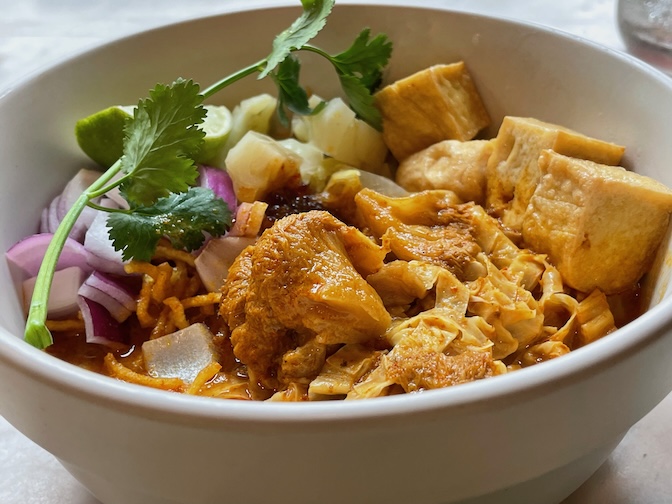
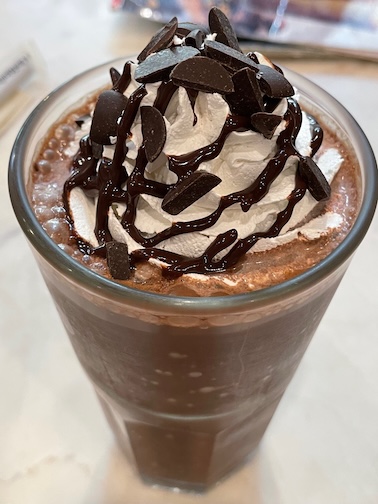
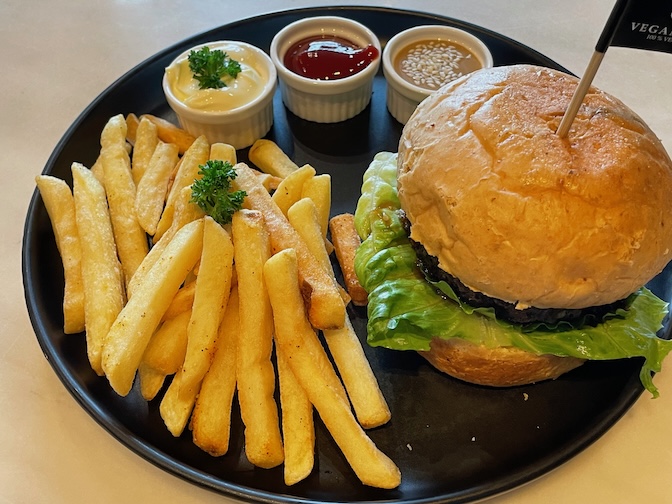

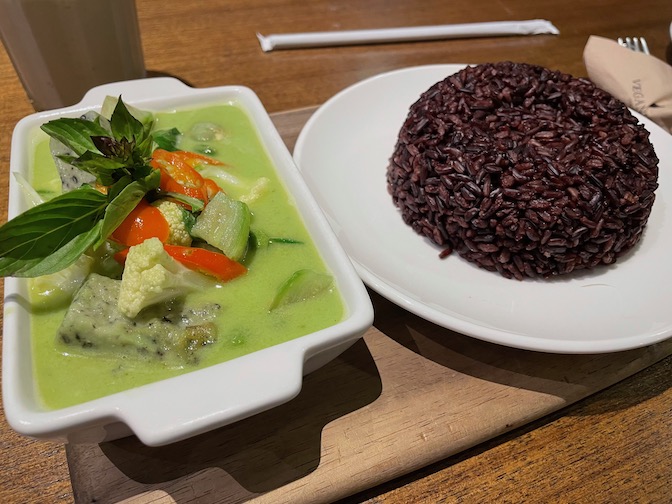
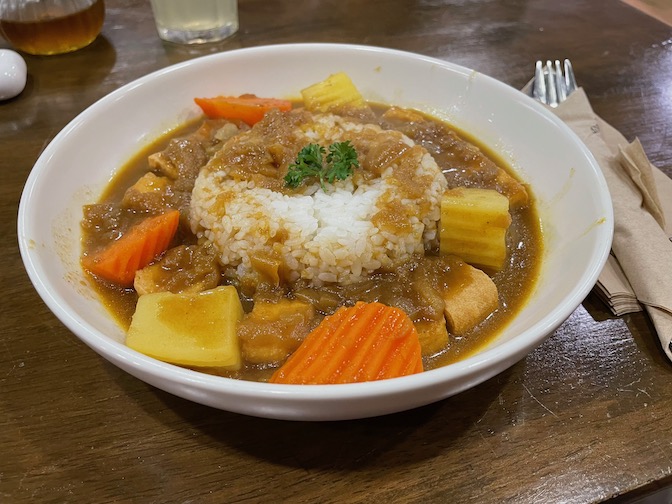
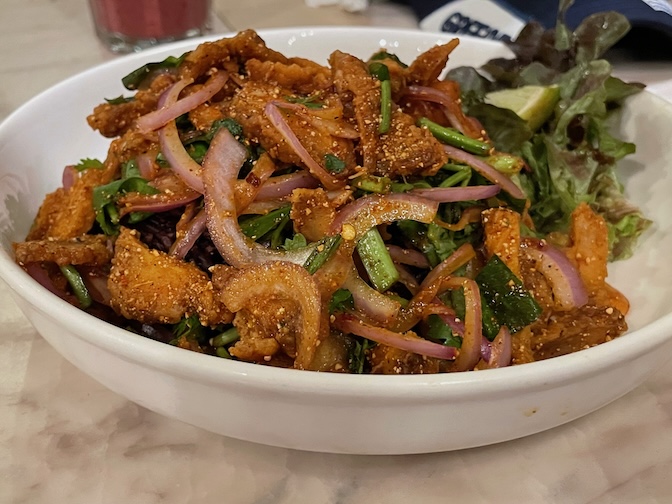
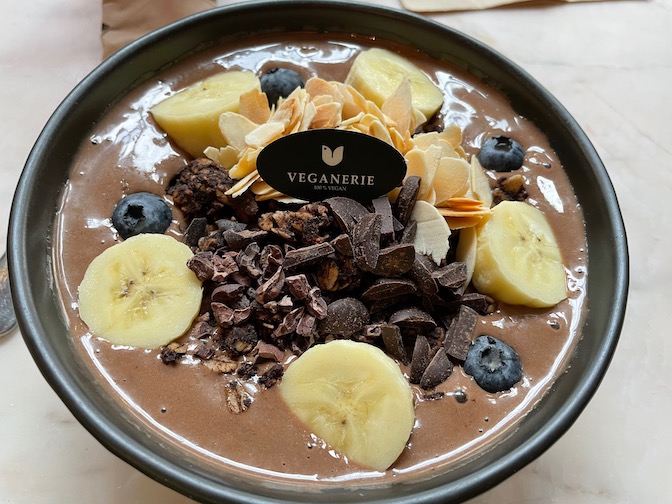
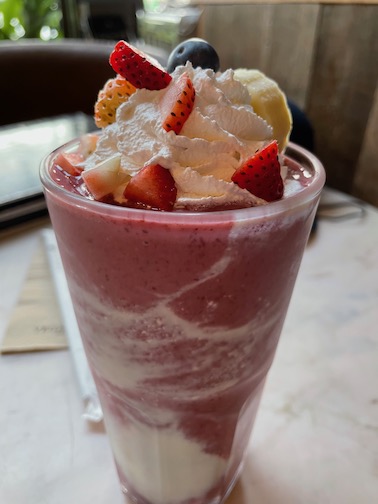
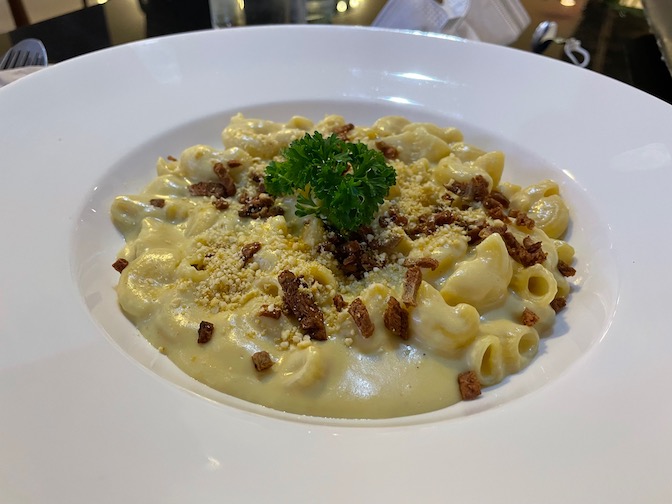
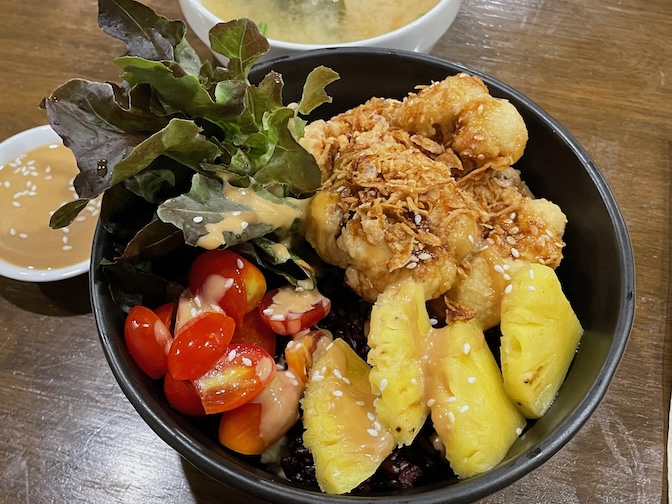
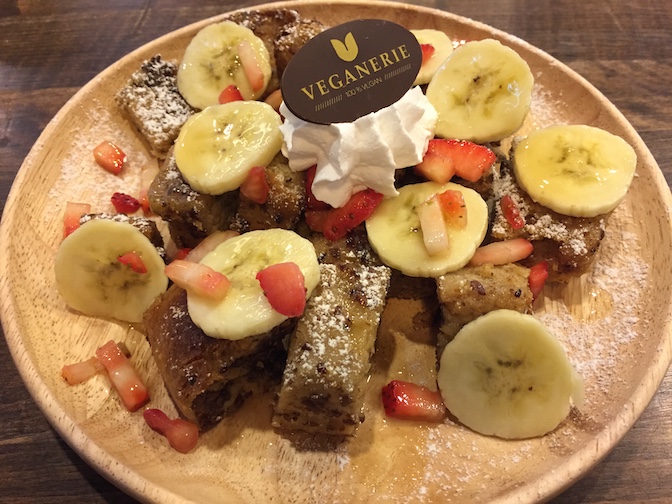
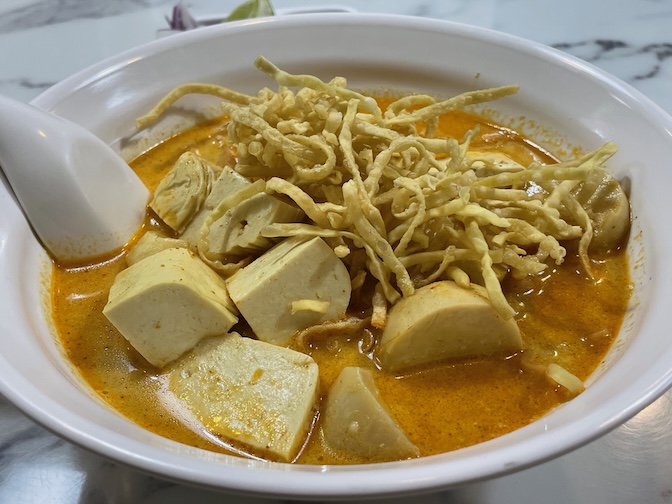
Khao soi has sneakily become my favourite Thai dish. At Veganerie they offer high-protein alternatives to some standard dishes, by doing things like using tofu noodles instead of normal noodles. Perfect for after a workout. Khao soi with tofu noodles costs 255 baht and contains 35g of protein.
Vegano
There are very few certainties in life.
Death. Taxes. And if you see me in Vegano, I was drinking beer until 3am. This is where I come for my hangover food, and God-damn is it good hangover food.
Slightly confusingly, Vegano isn't a vegan restaurant. 50% of the menu is non-vegan, with the other 50% being vegan equivalents of the same dishes.
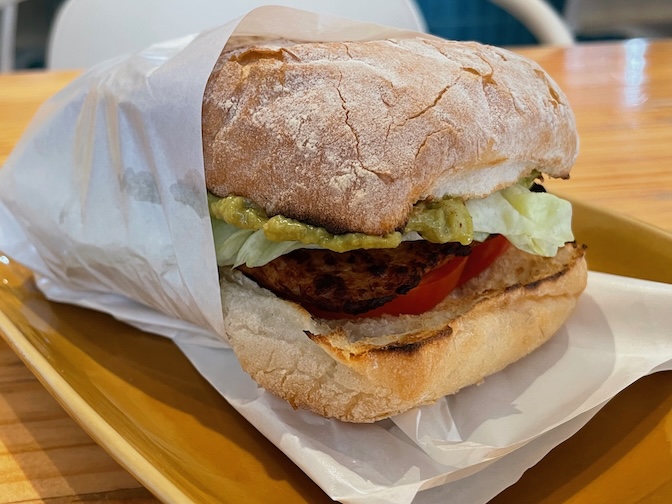
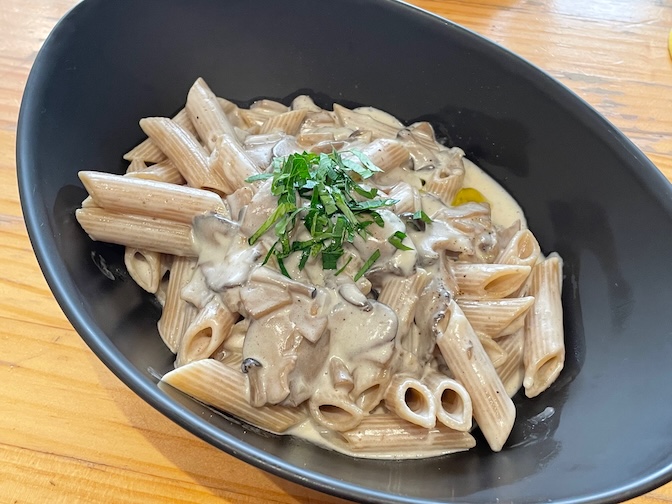
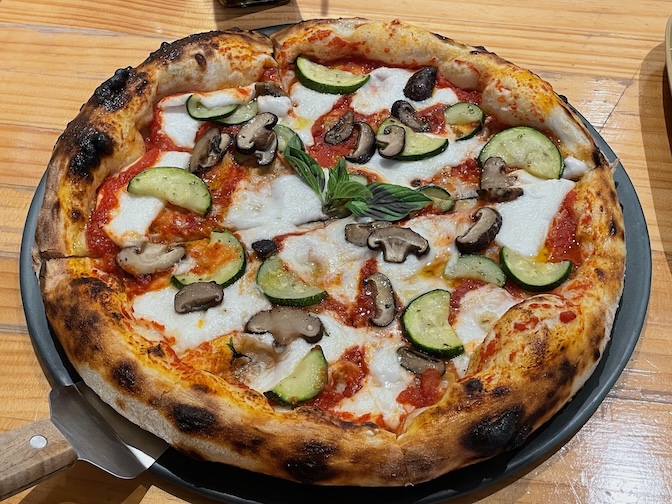
The vegan part of the menu is split into five parts: Pizza, pasta, sandwiches, grain bowls and desserts. I don't really like sweet things, and as no one has ever had a hangover and thought "I feel like a grain bowl," I've never tried either of them. But the pizza, pasta and sandwiches are some of the best I've ever had. This is top quality vegan junk food.
The pizzas are available by the slice, as a 12" pizza, or as a 15-16" pizza. A couple of years ago they raised their prices, but for some reason the pizza slice prices stayed as they were. Most of the 12" pizzas are now listed at 430 baht, but as the slices, which are basically small pizzas, are still no more than 160 baht, then getting two slices is about the same size as a 12" pizza and much better value. Pizza options include the vegan spicy kra prow sausage, vegan tuna, onion and capers, and vegan Thai spicy chorizo.
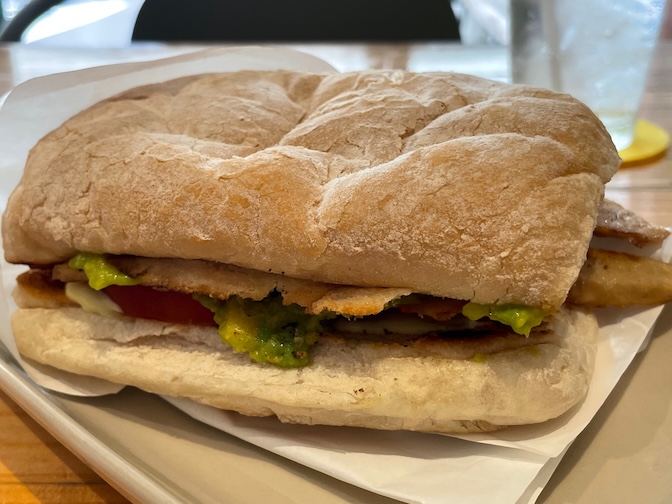
Vegano do delivery on Grab. Starting at 190 baht, getting pasta delivered is a very quick, cheap dinner. Options include pesto sauce or mushroom and vegan cream, and if you get wholewheat pasta it's not even that unhealthy. I can't say the same about the sandwiches. Options include the vegan guacamole burger panino (290 baht), and my favourite, the vegan chicken and guacamole (270 baht).
Being about a mile from the nearest BTS station, getting to Vegano is a bit of a walk, which is kind of what you need when you're hungover, even though it doesn't always feel like it. And they break my cardinal rule: They don't include tax in their prices, so however much you think you're going to pay, add 7%.
That would normally be enough to stop me going somewhere, but the food is just that good. And sometimes I'm just that hungover.
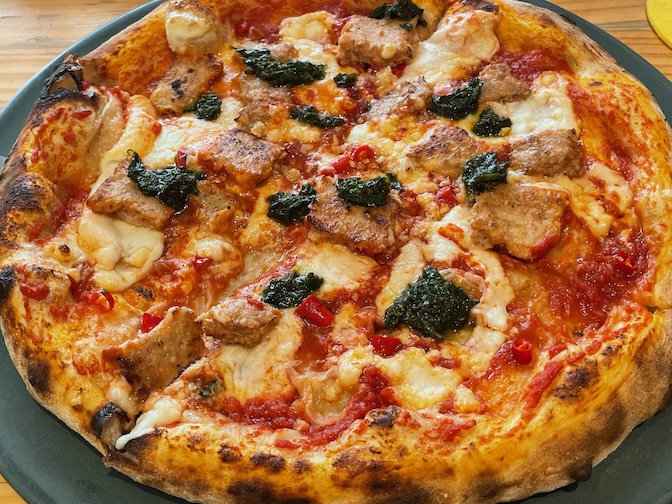
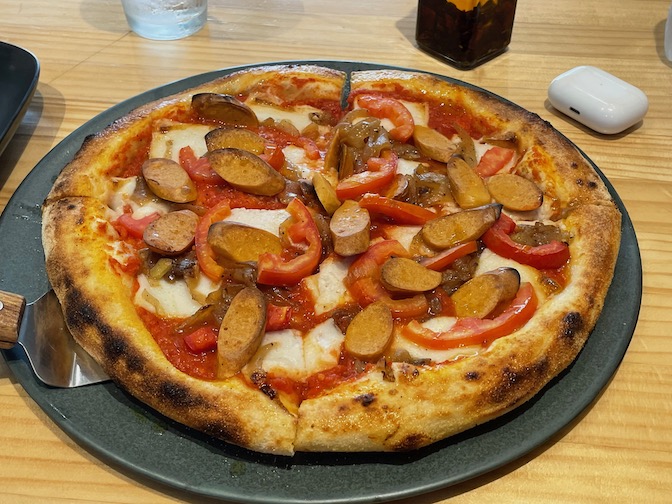
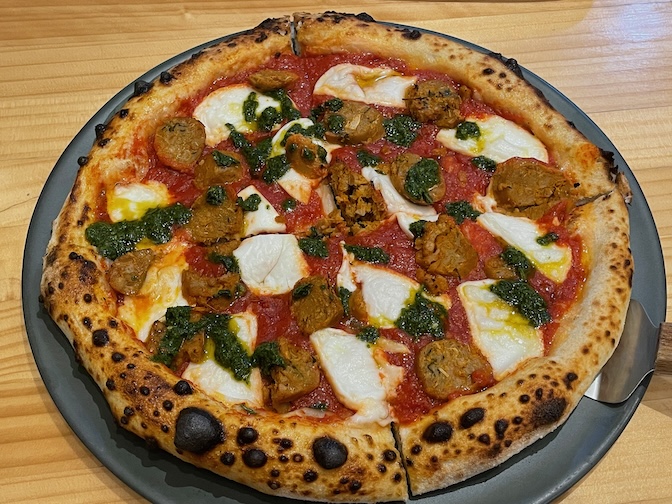
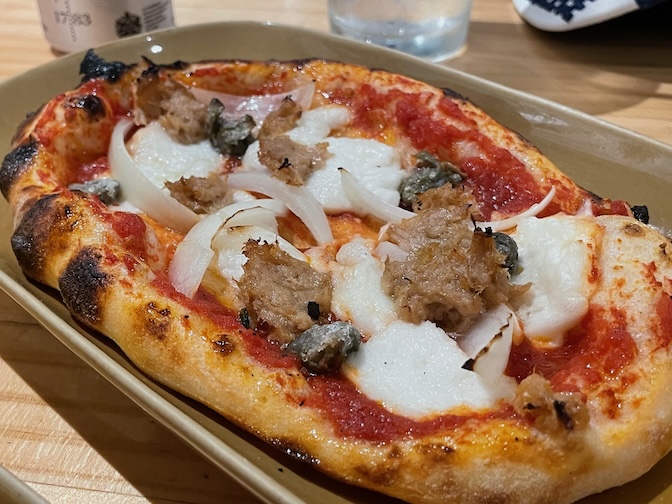
The sausage on this 12" spicy kra prow sausage pizza was so realistic that I had to check it was actually vegan. They assured me that it was. It costs 430 baht (plus 7% tax).
Bartels
Bartels is everything I hate about the world.
I've spent as much time in Thailand as I have, because I enjoy being here much more than western countries. So I have a certain resentment of foreigners who come to Thailand and make no attempt to integrate because ultimately, the character of a place will be swayed to the will of those that have the most money. And as more wealthy westerners arrive in Thailand insistent on living just like they did at home, tourist-heavy parts of Thailand are becoming what I sought to escape in the first place. Bartels is a perfect example.
When you walk-in, you won't see a local face in here, it's all westerners. The menu is in English, the staff all speak English, and the atmosphere resembles nothing of Thailand. I should hate it.
It's just that they do really good bread, and good bread is hard to come by in Asia. It's treated more like a sweet in this part of the world, which if you grew-up eating European bread, is kind of disgusting.
Bartels now has four locations in Bangkok, and in each they have their own bakery. All the bread they serve is made on-site, and fuck is it good. It's the best bread I've found anywhere in Asia.
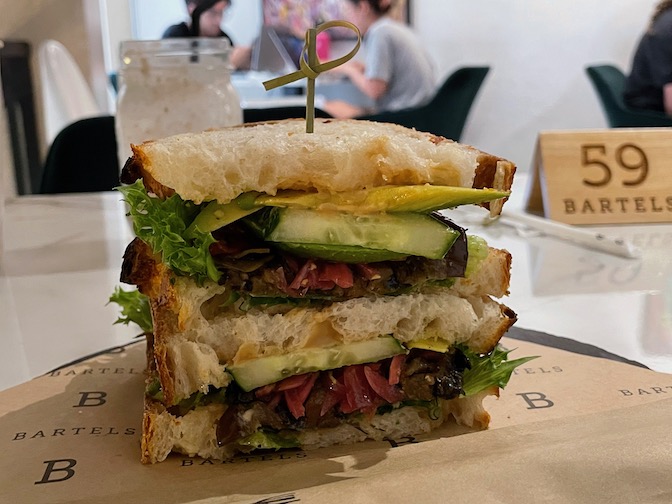
The menu isn't vegan, but they have some clearly-marked vegan options including sandwiches and toasties, as well as smoothies and smoothie bowls.
Their first location in Thong Lo gets uncomfortably busy at peak times and you might struggle to find a seat. Their Asok location is the same, as is the one in Udom Suk. However, their branch in Sathorn gets fewer visitors and I've never been here when it wasn't comfortable, so if you can make it there this is the best one.
Every time I go to Bartels I hate myself a little bit more for contributing to a business that makes no effort to cater to the local market. But fuck their bread is good.
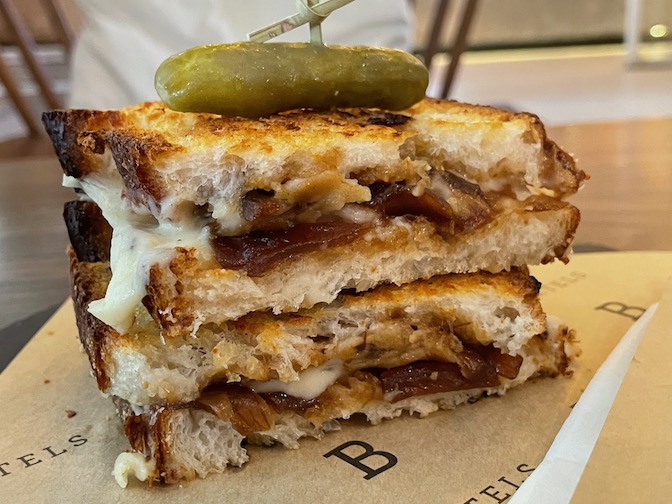
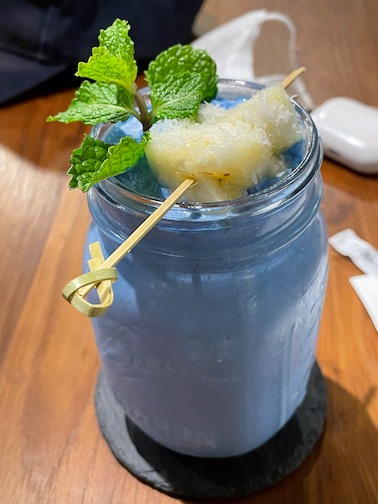
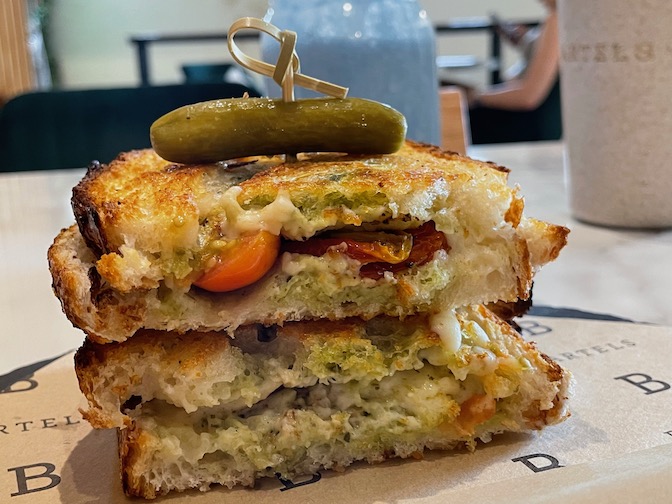
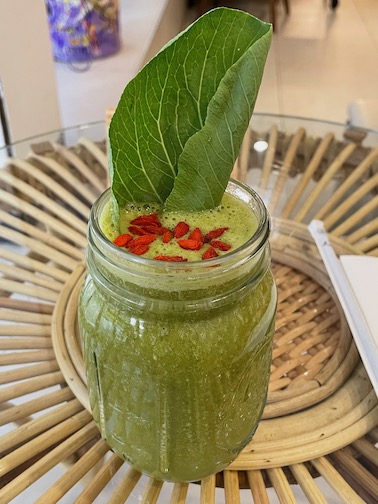
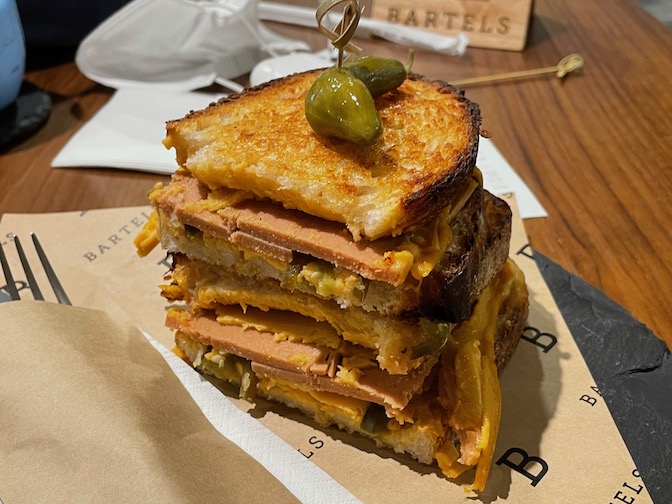
This is the grilled vegan onion soup toastie. I don't understand either, but it tastes alright and only costs 200 baht.
Bai Plu House
Bai Plu is a fully vegan restaurant. While they have a mix of cuisines, I'd say that the menu is primarily Chinese.
It's a pretty small place. And although they have a bilingual menu, it doesn't aim itself at foreigners like the restaurants above. That's not only reflected in the service and the atmosphere, but also in the prices, which are more than reasonable.
When I'm staying nearby, this is a place I come to everyday.
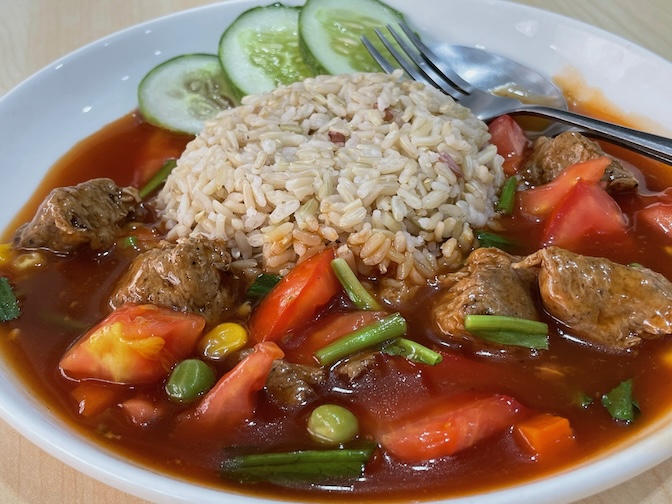
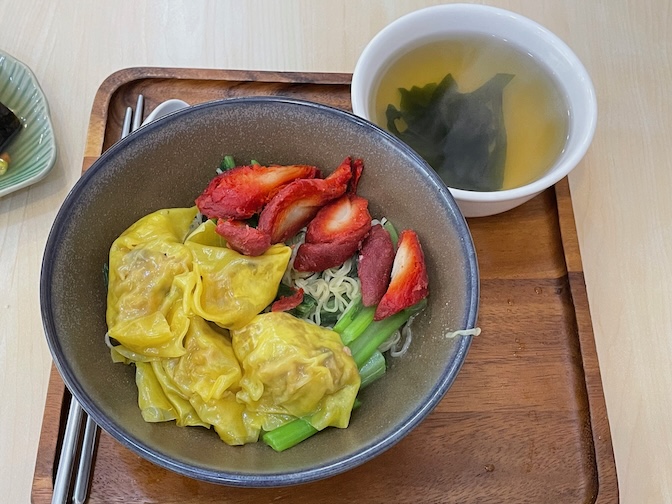
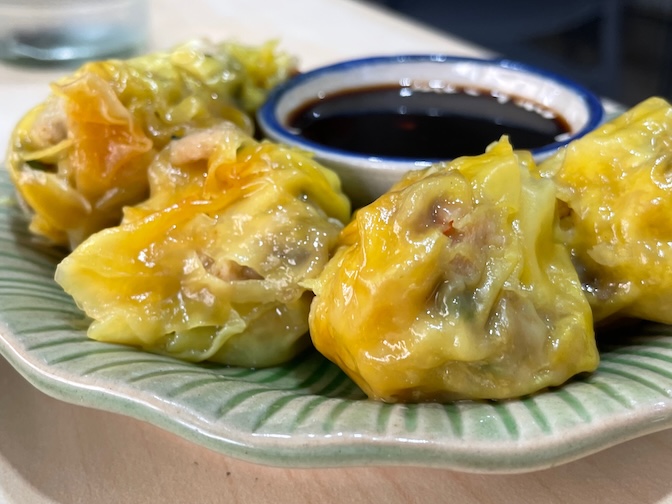

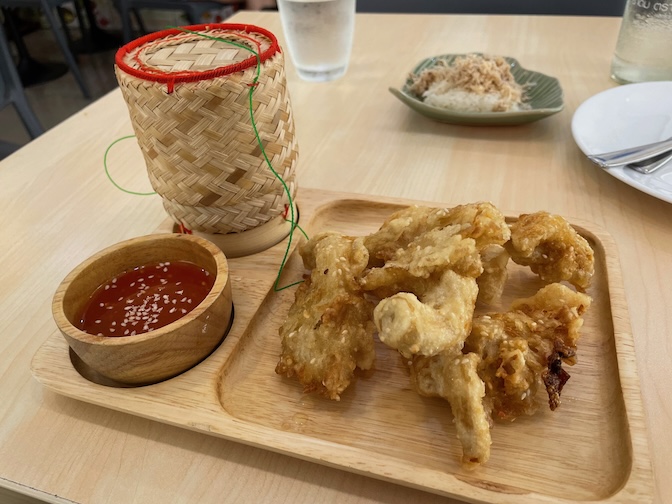
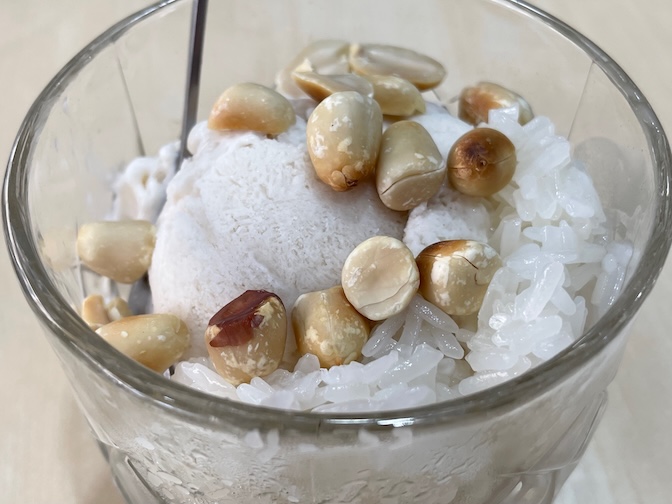
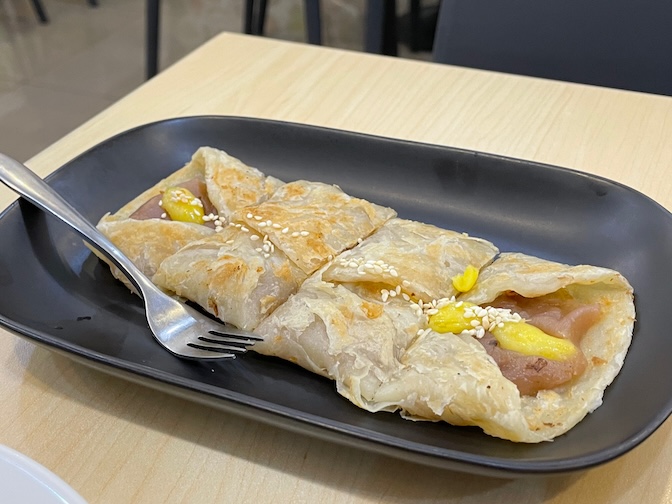
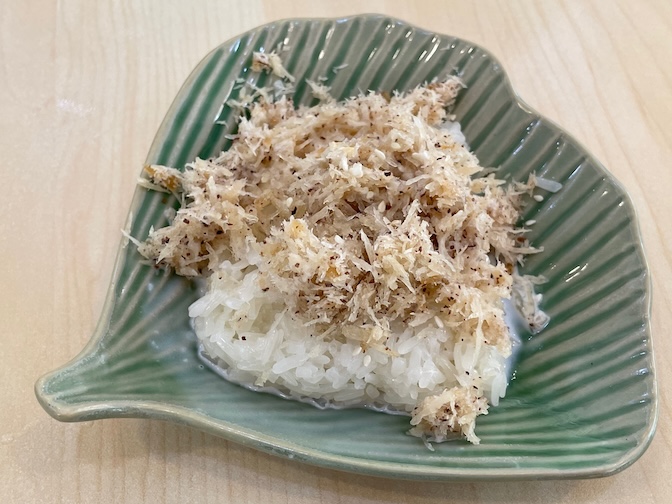
Bai Plu have a pretty big menu to choose from. The vegan meatballs with rice is definitely one of my favourite options. It costs 139 baht.
Getting vegan supplements in Bangkok
For a city the size of Bangkok, finding vegan supplements is honestly a pain in the arse, even more so if you don't want to pay through said arse. Thailand places high tariffs on imported supplements and doesn't have much of a home-grown industry, so that's great.
If you have a long-term address and can order online, things become a lot easier, but if you only want products you can buy in-store, as I do, then good luck.
Protein powders
It's quite easy to find vegan protein powders around Bangkok. It's less easy to find reasonably-priced vegan protein powders around Bangkok. The best I've come across is that in many branches of Watsons (including this one), they stock Merry Nutrition vegan protein powder at 899 baht for 1,050g.
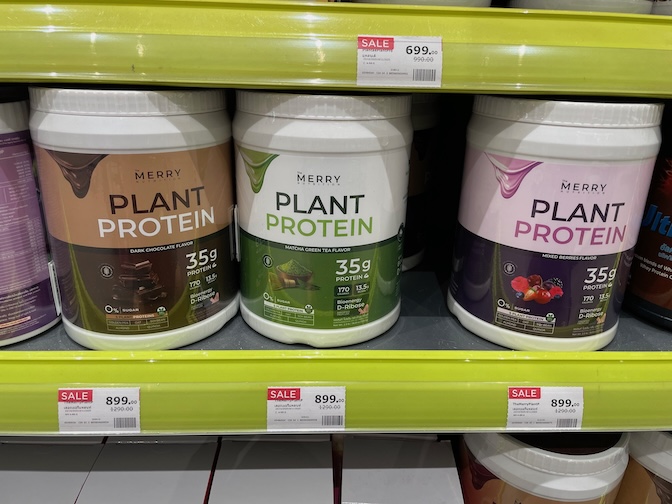
Merry Nutrition Plant Protein is the best value vegan protein powder I've found in Bangkok at 899 baht for 1,050g. It comes in three flavours. I usually go with the mixed berry flavour.
Multivitamins
The only multivitamin I could find in Bangkok that I can say with certainty is vegan, is the Swisse Essential Multivitamin, available in Boots. It proudly says 'Vegan' on the bottle, and is a decent multi, just be aware that you're going to pay for it.
When not on special offer it costs 990 baht per bottle, but that's for 60 tablets. The recommended dosage is one per day, so for sixty days worth that's not too extortionate.
I've found it as low as half price when Boots has a sale.
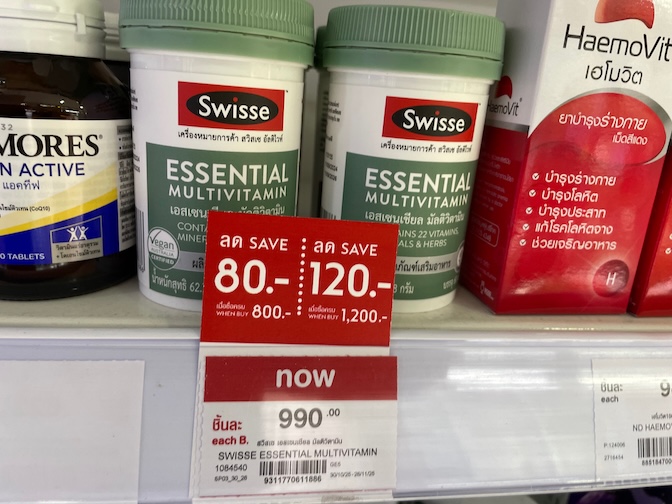
The Swisse Essential Multivitamin is certified vegan, and certified overpriced, but I haven't found any other vegan multis in Bangkok and at least you get 60 days worth.
Calcium
A vegan calcium supplement is something that's not easy to come by in Bangkok, mainly because they all contain D3 which is almost always derived from animal sources. The only vegan calcium that I've been able to find is one of those fizzy tablets that you dissolve in water, sold at Tops for 145 baht for 20 tablets. They stock supplements by the German brand Dermosana, some of which, including the calcium, are vegan.
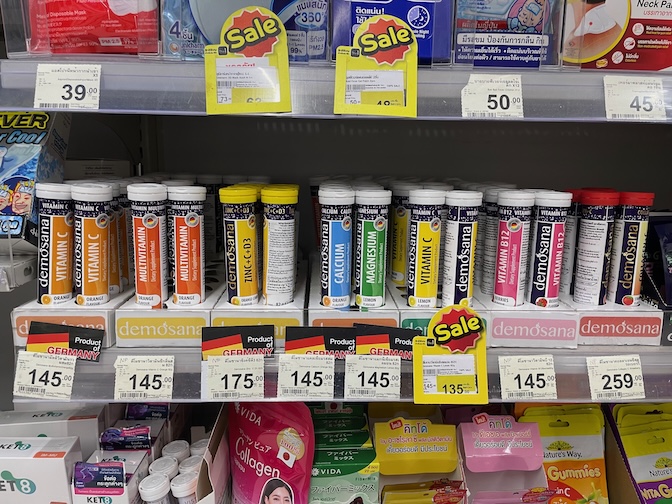
The only vegan calcium supplement I've found in Bangkok are these Dermosana effervescent tablets that you can find in Tops.
Magnesium
Also sold at Tops (see the above photo) are Dermosana magnesium effervescent tablets, which ChatGPT insists are vegan, although not overly potent. They're 145 baht for 20 tablets.
Also 'likely' vegan, according to ChatGPT is the Mega Nat Mag supplement available in Boots, Watsons, and pretty much anywhere that sells supplements. It has a couple of ingredients that can be both plant or animal derived, so it depends how strict you're being whether you chance this one. In Boots these are 270 baht for 30 tablets.
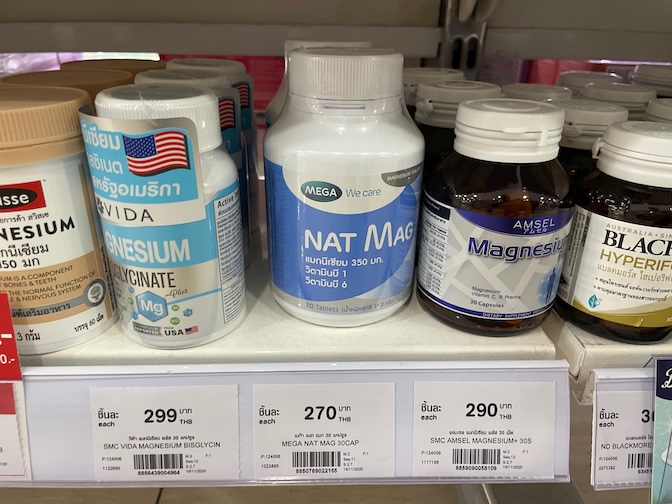
You'll see Mega brand supplements all over the place - they're one of the most common brands here. Most aren't vegan, but the Nat Mag 'likely' is, according to ChatGPT.
Zinc
I haven't found any certifiably vegan zinc supplements in Bangkok, but one that's 'likely' vegan according to ChatGPT, is the Boots Chelate zinc. It contains one ingredient that can be either plant or animal derived. If you can live with that then it costs 199 baht for 60 tablets.
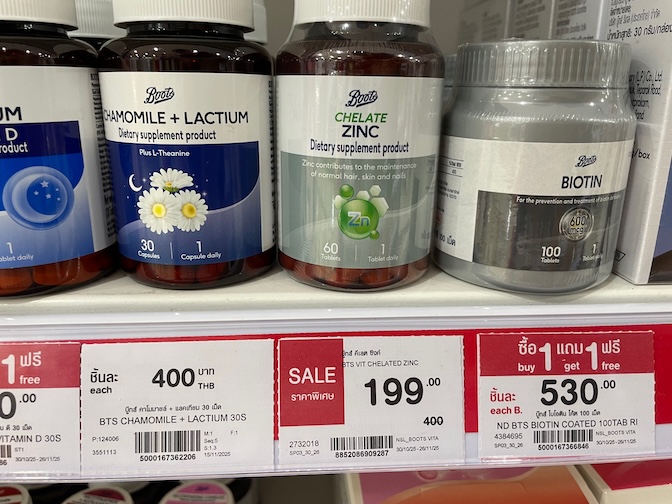
Boots chelate zinc is 'likely' vegan, and costs 199 baht for 60 tablets.
Algae oil
Boots stock an algae-based omega 3 which costs an exorbitant 790 baht per bottle (60 capsules, recommended dose 2 per day). This is the only in-store vegan omega 3 I've found in Bangkok.
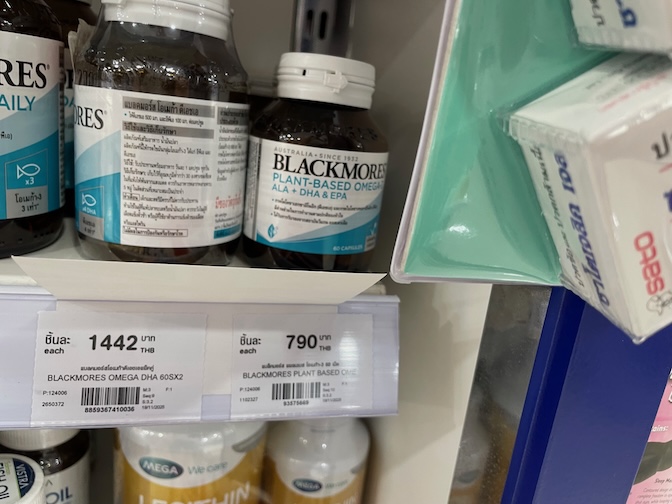
The Blackmores omega 3 isn't cheap at 790 baht per bottle, but it's the best I've found.
Where I've stayed as a digital nomad in Bangkok
Since first coming to Bangkok as a digital nomad in 2022, I've been here thirteen times, staying in ten different accommodations. Bangkok has changed a lot in those four years as tourism has returned post-covid, so in order to keep this article concise, I'm only going to list the places still relevant in 2026.
Mitt Haus
| Room | 8,635.51 THB |
| 7% VAT | 604.49 THB |
| Cleaning fee | 300.00 THB |
| booking.com pays | -831.60 THB |
| Total |
8,708.40 THB
(1,244.06 THB per night)
|
Mitt Haus is much more an apartment than it is a hotel. It's self check-in, and apart from the housekeeper who's there for a couple of hours on most days and doesn't speak any English, there are no staff present. I prefer that, but it's something to keep in mind if you like to have a reception desk to ask questions to.
When I checked-in here, I was immediately wowed by how nice the room was and how much natural light gets in. My room occupied the entire floor, meaning I had floor-to-ceiling windows at both ends of the apartment so a lot of light gets in from sunrise to sundown.
That feeling of euphoria lasted for about two minutes, until I realised that the room doesn't include a kettle. Having to go down to the communal kitchen might not sound that troubling, but as someone that drinks about ten cups of tea per day, not being able to make them in my room was an unwelcome inconvenience.
A couple of minutes after that I realised that the room doesn't have a fridge either. And as someone that makes a fruit smoothie every morning and evening, being able to store my fruit is imperative. These two revelations really took the wind out of my sails for how I felt about Mitt Haus.
It's located in Ladprao, and I love Ladprao. I lived here from 2012 to 2014, and while the skyline is now a bit different with new skyscrapers having popped-up since then, the feeling of it as a place remains the same. It's an area that gets very little tourism. You will see a few expats around, so it's not like there aren't any foreign faces, but little here is aimed at tourists, which for me is far more comfortable than staying close to the city centre.
That being said, the transport links here are amazing. The apartment is easy walking distance to Phahon Yothin MRT station and Ha Yaek Lat Phrao BTS station, and it's only a little bit further to Lat Phrao MRT station, allowing you to easily access the new yellow line.
There are also plenty of buses on Ladprao Road, and if you go out at night in Sukhumvit and sit there drinking until after the MRT and BTS have stopped running, then getting a Grab Bike back to the room costs 126 baht.
The lack of tourism in this area also means that, especially compared to the city centre, Ladprao is not great for getting vegan food. So Vegan in the second floor food court of Lotus's is a God-send in that regard as it's pretty cheap, has a huge menu, and can be walked to in less than 20 minutes from Mitt Haus (if you figure-out the route down some side roads, through a hidden gate and across the ground floor of a multi-storey car park). You can also get delivery from them on Grab in about 25 minutes.
Apart from the lack of a kettle and a fridge, the apartment is really nice. It's spacious, the bed is comfortable, and it's nicely decorated. Considering that, it makes me wonder why they went to all this effort to make it so comfortable, then neglected to include a kettle and fridge - two items that there is space for, and that aren't very expensive.
There's a desk and chair to work at in the room, with the caveat that they're located directly underneath the air conditioner. As I've seen my share of air conditioners leaking in Thailand, I wasn't willing to risk using my laptop on that desk, but maybe give it a shot if you want some excitement while you work. I typically worked in bed instead.
You don't get any keys when you check-in here. Instead you get a nine-digit keypad code for the main entrance, and another nine-digit keypad code for your room door. That seems a bit excessive, and it took me until my fifth day here until I had both codes memorised so could get into my room without having to look at my phone. As the keypads are heat-sensitive, and I often arrived back very hot and covered in sweat, getting into the building and the room could be a little troublesome, but I always managed eventually. Entering two nine-digit keypad codes when drunk was not fun.
It's worth noting that there's no way to lock the bedroom door from the inside. That was never a problem during my stay, but anyone who knows the code to your room can get in, even when you're inside, so it doesn't feel overly secure. I'd prefer if there was a way of securing the door from the inside.
There's a TV in the room, but note that it's the only TV in the world I've ever encountered that doesn't have an HDMI port. I didn't even know it was possible to buy TVs without an HDMI port. It meant I couldn't plug-in my Apple TV. Luckily I coincidentally bought my first ever iPad while staying here, so it gave me an excuse to use my iPad for workouts instead, so I guess it was for the best.
The wifi here is lightning fast. I clocked it at 615mbps download speed, and 600mbps upload speed when I did a speed test. It's reliable as well, as I had no stability issues during my stay. In the communal kitchen downstairs, there are some free snacks for guests, but the real prize is that there's free bottled water.
As I consume an ungodly amount of water each day, I still bought my own from 7-11 because I thought it'd be unfair on the hosts to drink as much water as I usually do and expect them to pay for it all, but I got through my share of free water as well, which saved me a bit of money and too many trips to 7-11.
You're only about a five-minute walk from a big Big C, so getting groceries is incredibly convenient.
My feelings about Mitt Haus are that once I adjusted to not having a kettle and a fridge in the room, I really enjoyed staying here. I love the area, I love how comfortable the room is, and I love how much daylight gets in. That being said, not having a kettle and a fridge is a deal-breaker for me. I wouldn't have booked here in the first place if I'd realised it, and I probably won't stay here again because of it. Which makes me very sad, because given the number of places I've stayed in Bangkok, I've struggled to find somewhere that I actually like to be, and this place is a kettle and a fridge away from being perfect.
I need my tea though. It's too important to me that I can make a cup of green tea in my underwear the second I wake-up each morning, and Mitt Haus doesn't afford me that opportunity.
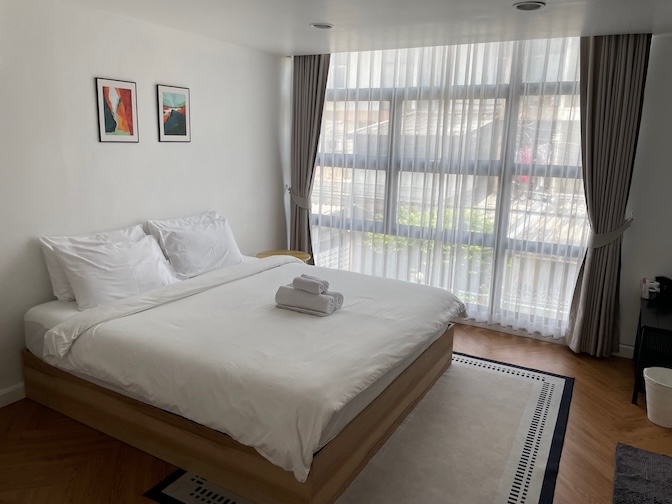
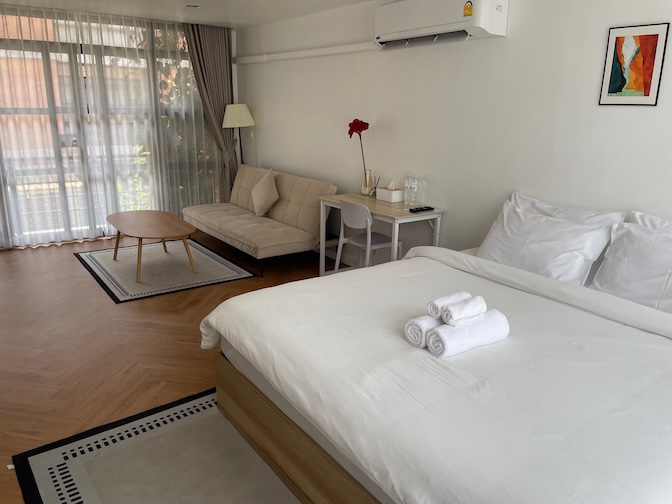
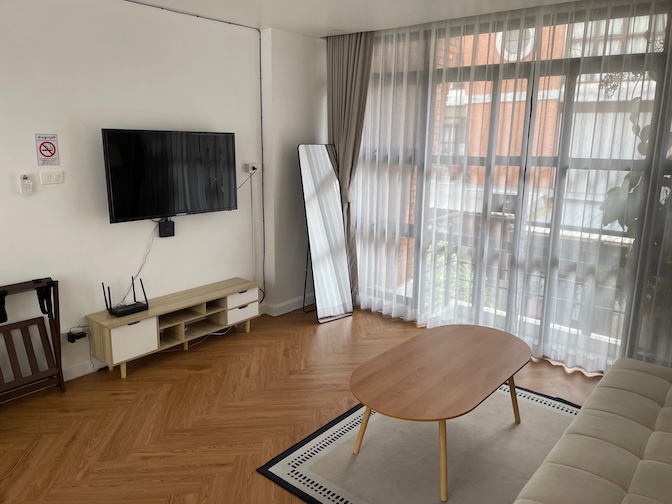
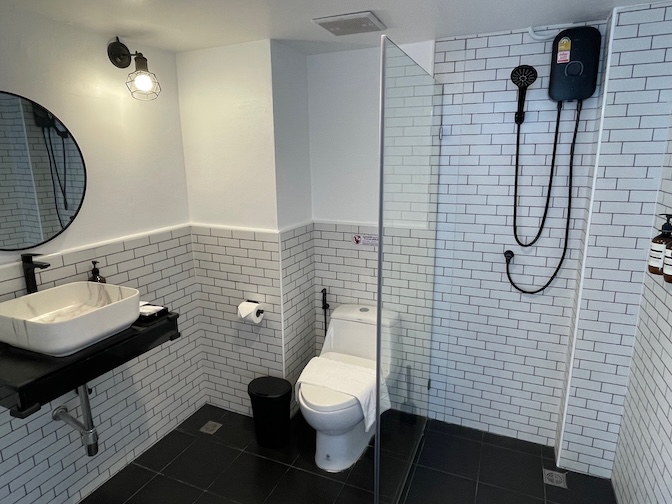
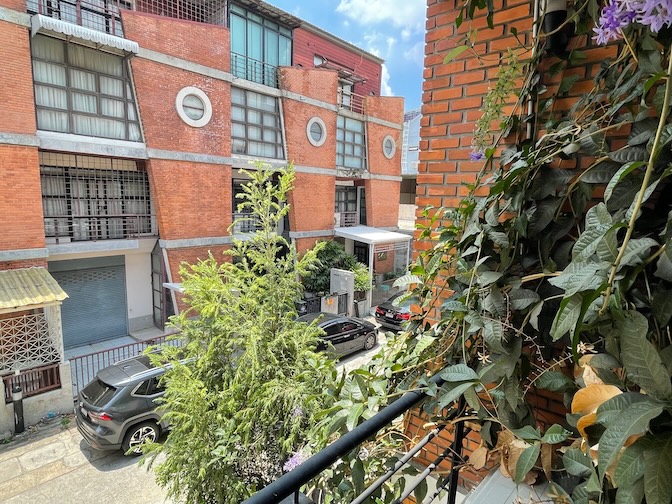
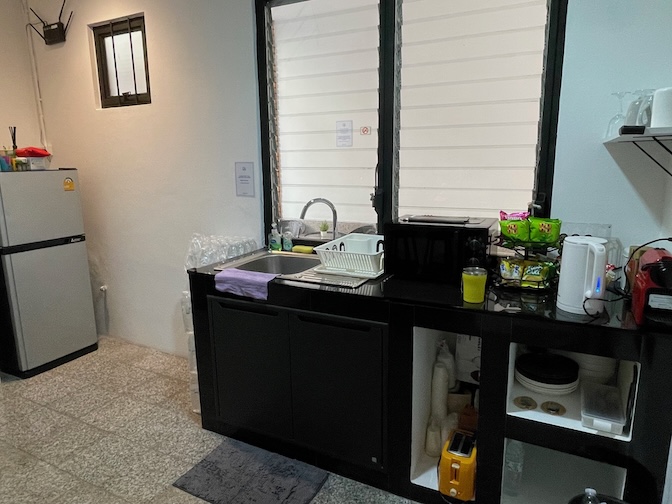
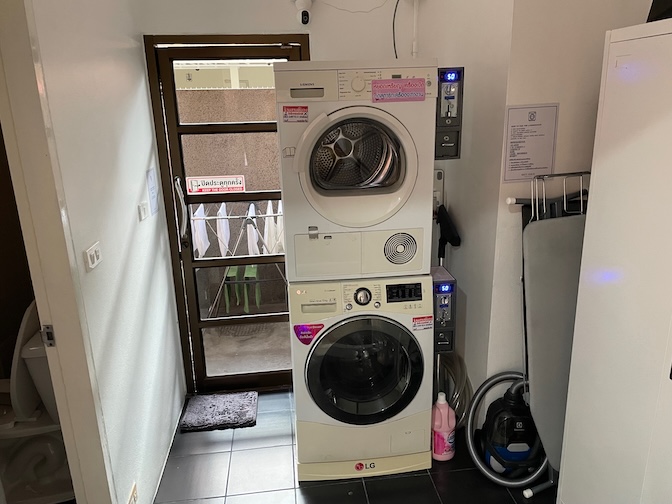
My favourite thing about Mitt Haus is how much natural light gets into the room. At both ends there are floor-to-ceiling windows. Waking-up in this bed each morning was a joy.
Siam Plaengna
| Room | 25,000.00 THB |
| Total |
25,000.00 THB
(892.86 THB per night)
|
Siam Plaengna is a residence, and as such is the first place that I've stayed as a digital nomad in Bangkok that's a fully-equipped apartment, complete with kitchen.
It's located north of the city centre, close to Ladprao, and it's worth noting it's in a very local area, and there isn't too much going on in the immediate vicinity. It has local restaurants, many 7-11s and a nearby evening market. But you're a twenty minute walk from Ratchadaphisek MRT station - the nearest worthwhile local transport, and going in the other direction it's about a thirty minute walk to Chatuchak Park and its MRT/BTS stations. And if you're vegan like me, you'll find very little worthwhile food within easy access. I ordered my lunch on Grab most days that I stayed here.
I knew this before I booked, but I booked anyway, because I decided that the positives of being in a fully-equipped apartment would be worth it. And you know what? They were.
Did I get fed-up with the location and being so far from the places that I like to go? A little. But I was working on a new coding project while I was staying here, so I also valued the isolation. The nearest Starbucks is about a 25 minute walk for when I wanted to get out the room and code somewhere else.
What you get in the room though, is a sufficiently-comfortable sofa with a good TV in the living room. There's a coffee table, but this can be easily slid-into the kitchen, leaving a big open space to do workouts. The bed is also perfectly comfortable to work from, and if you're one of those weird people that likes to sit at a desk, the table and chairs in the kitchen suffice.
The room has a washing machine out on the balcony, which saves a tonne of time going to launderettes, and the Internet here is good enough. I had one day during my 28-day stay where it was a bit patchy and I struggled to do video calls, but the rest of the time it was always ok.
I'd happily stay again - I definitely appreciated having a full apartment for a change, just decide if you can handle the slightly isolated location before you decide to come here.
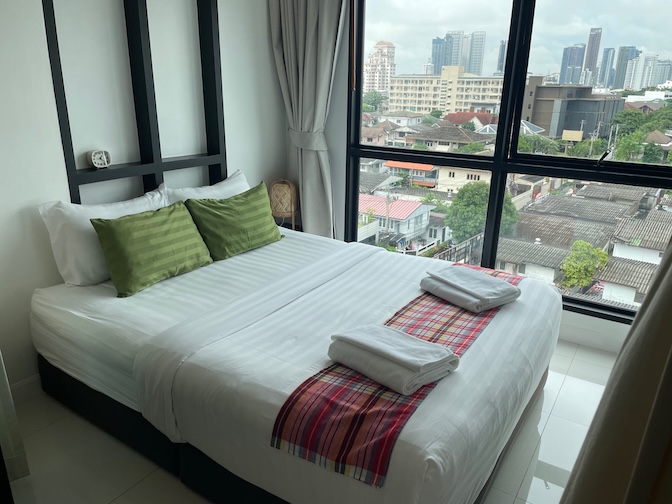
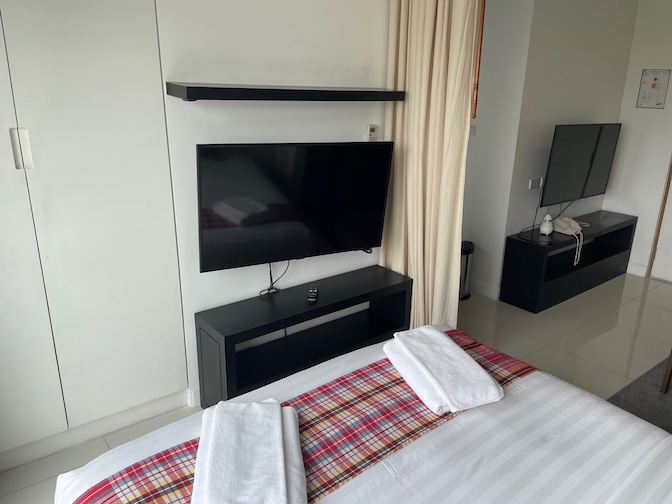
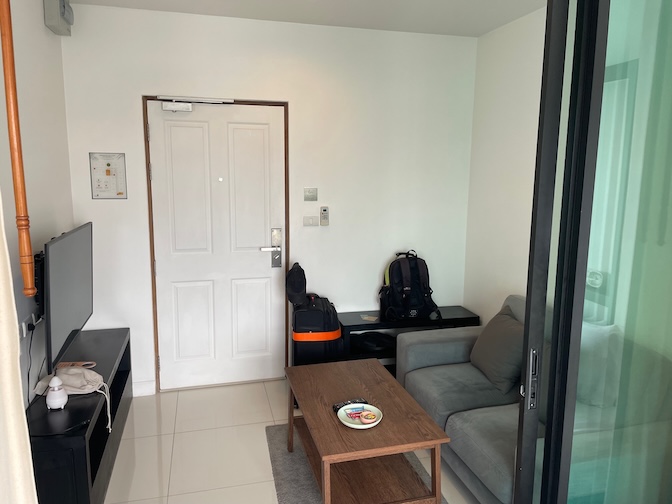
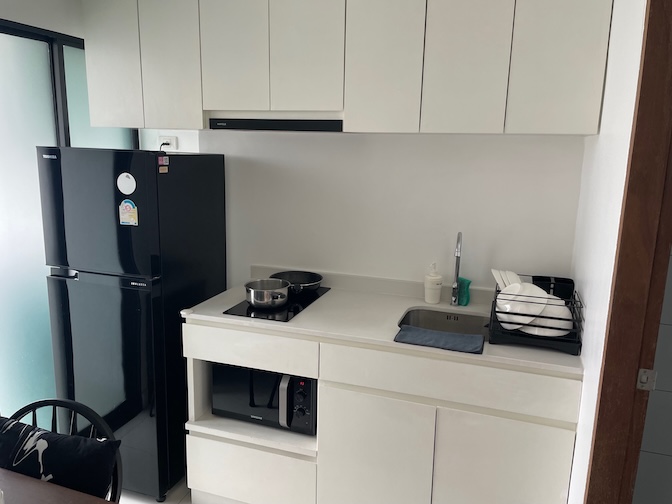
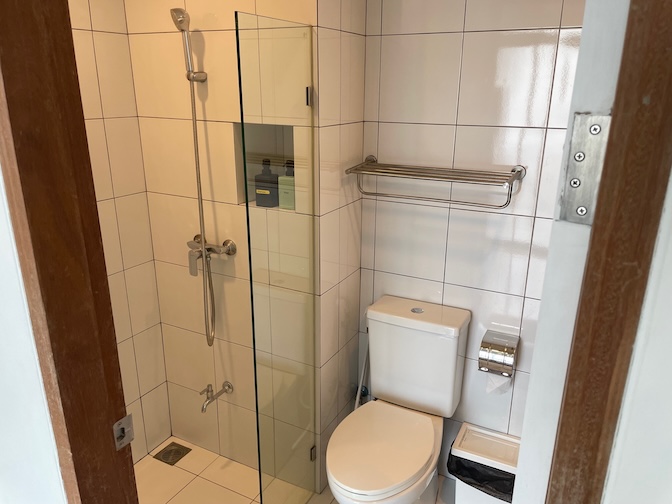
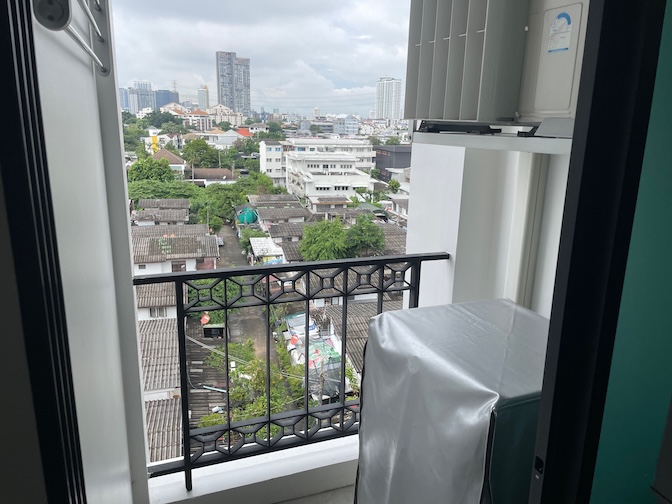
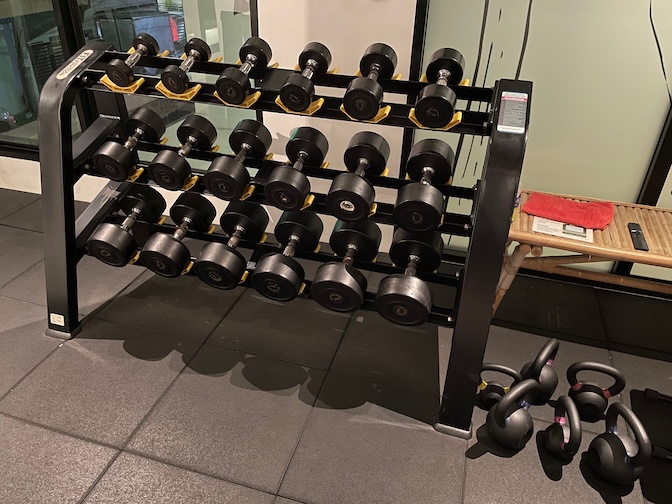
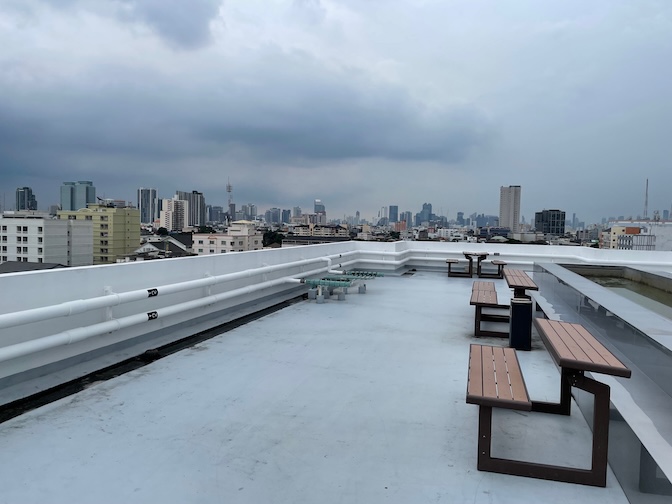
I was up on the top (7th) floor, meaning I got some great views and lots of daylight. Unfortunately my room faced north, so I didn't get to wake up with sunshine on my face, but I still loved how much light got in here.
The Square 101
| Room | 23,361.80 THB |
| Taxes & fees | 4,135.40 THB |
| Cashback (paid after 60 days) | -427.20 THB |
| Total |
27,070.00 THB
(1,353.50 THB per night)
|
I was so confident that I was going to like staying at The Square 101, that I booked two stays here, either side of a trip to Huahin. Such trust was misplaced - I did not like it here at all. It's a hotel that's spent all its efforts on looking as nice as possible, but none of its effort on actually being practical for living.
I noticed this the moment I walked into my room, and saw that there was a kettle on the desk. It only had a short cable - about 50cm, but the nearest plug was about a metre away. I had to keep and use the kettle on the floor through my entire stay. Or in the bedroom, there are no bedside tables, nor any plugs next to the bed. I ended up moving the coffee table out of the living room and next to the bed, and using my own extension cord so that I could charge my devices next to the bed while sleeping.
That worked fine, but the fact both of these issues could have been resolved by the hotel with nothing more than a couple of extension cords and a cheap bedside table, shows what kind of place this is.
Another example is that, being a way from the main road like you are here, you're going to order on Grab a lot. And this seems to be the only hotel left in Thailand that doesn't have anywhere setup for Grab drivers to drop-off food. There's just a sign telling them to contact the parking attendant, but whether he's receptive to them is another matter. To ensure that you actually get your food, you have to go downstairs and meet the driver in person, but for a hotel in 2026, that feels like madness, but is another example of how nothing here is actually designed with practicality in mind.
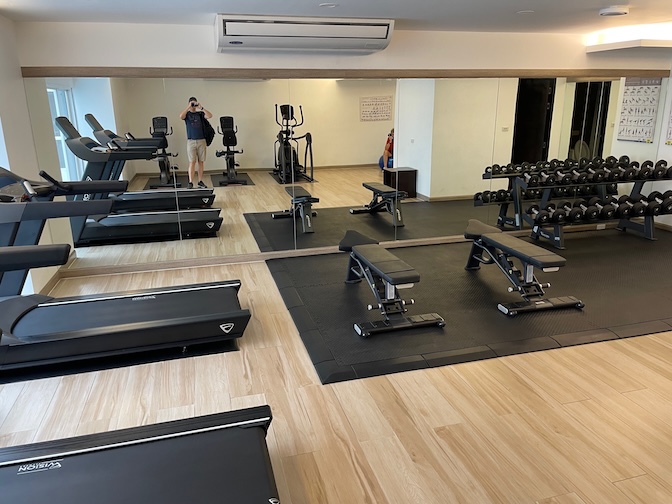
It's not all bad. The gym here is the best hotel gym I've seen anywhere in the world - I've seen actual gyms less-equipped than this one, and on the floor above there is a lovely communal balcony, and a co-working space/kitchen.
I've never understood the point of co-working spaces when I've got a perfectly good desk in the privacy of my room, but some people seem to like them. I found myself using it only when I needed to get the bins changed in my room, because the housekeepers here have a really odd schedule. It's the only hotel I've ever stayed at that doesn't make up the rooms until mid-late afternoon each day. As I'm a person who's up and about in the morning but who tends to be relaxing by the mid-afternoon, that really got on my tits too.
Everything that I've said so far was annoying, but I could have lived with it. There are two things that mean I would never stay at this hotel again.
Firstly, the wifi here is a joke. It's so unstable that you cannot complete a video call. You continually drop-out. The only saving grace is that my 5G worked well enough in the room that I could tether to my mobile hotspot, but I was embarrassed on multiple occasions by dropping-out in the middle of work calls.
And secondly, the bathroom in the room stinks. It smells like a public swimming pool toilet.
The hotel is aware of it, but they just don't seem to be able to do anything about it. When the housekeepers come into the room they spray it with some kind of perfume everyday, but that only does so much. And by the time I left I was so fed-up of having to breathe-in that smell everytime I used the toilet.
Needless to say, this hotel was a big disappointment compared to my expectation. I cancelled my second reservation, and I would not stay here again. I was very glad to eventually leave.
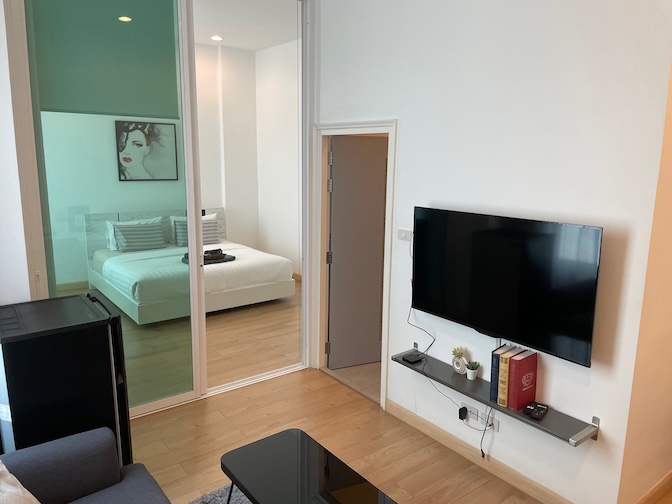
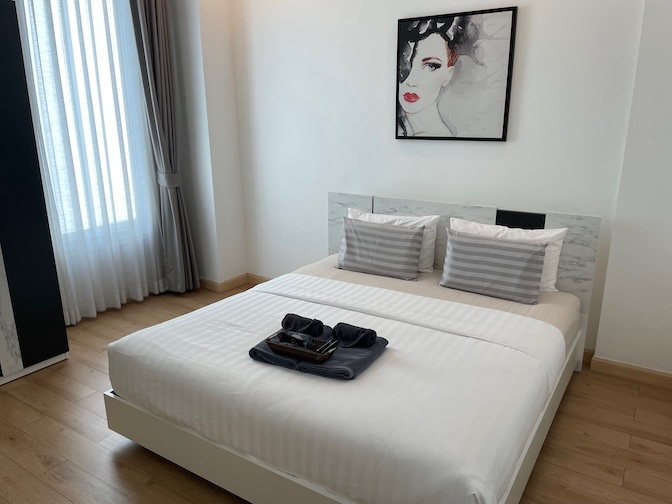
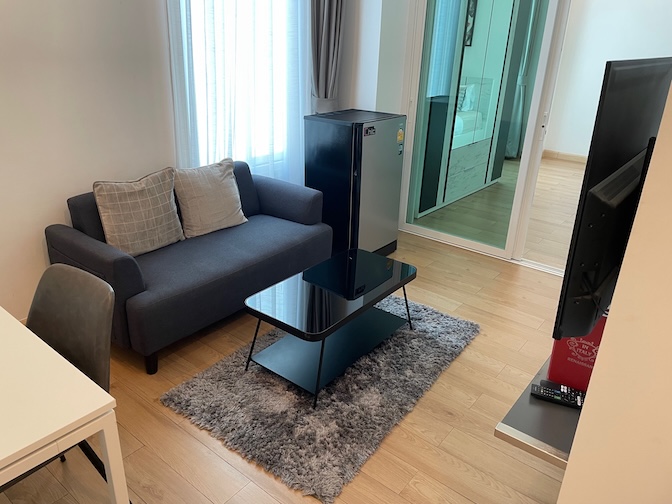
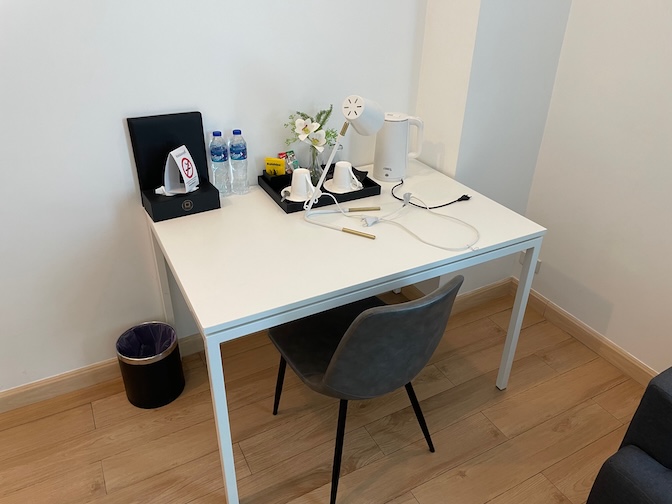
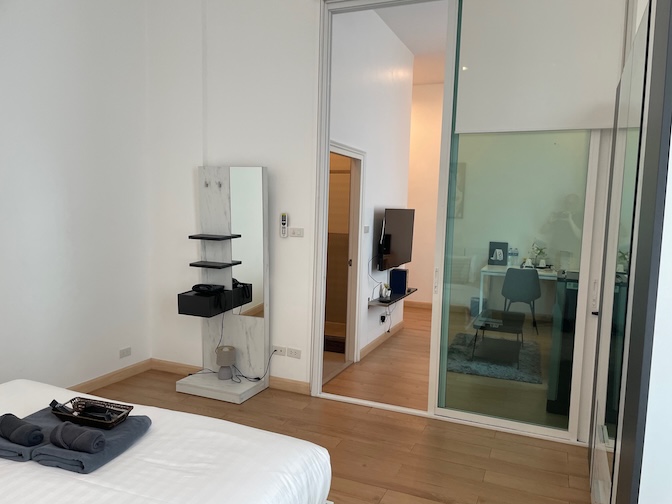
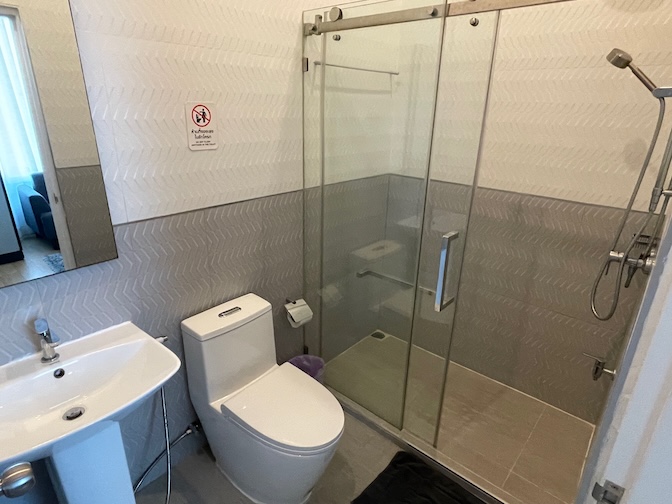
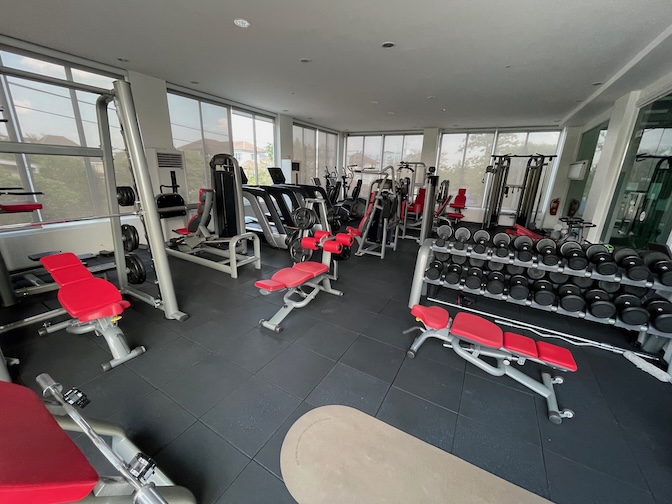
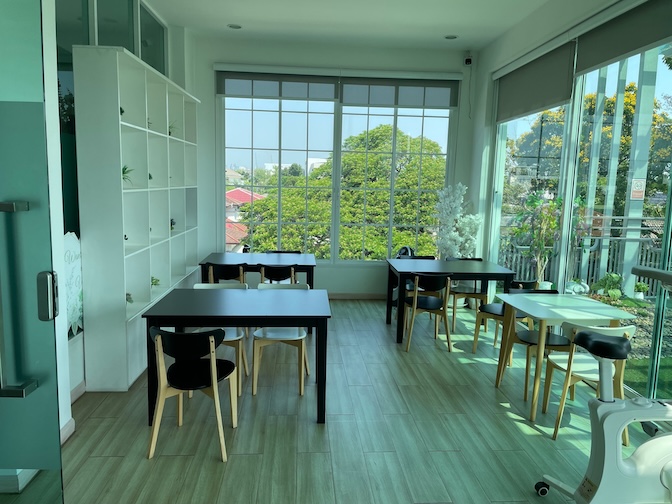
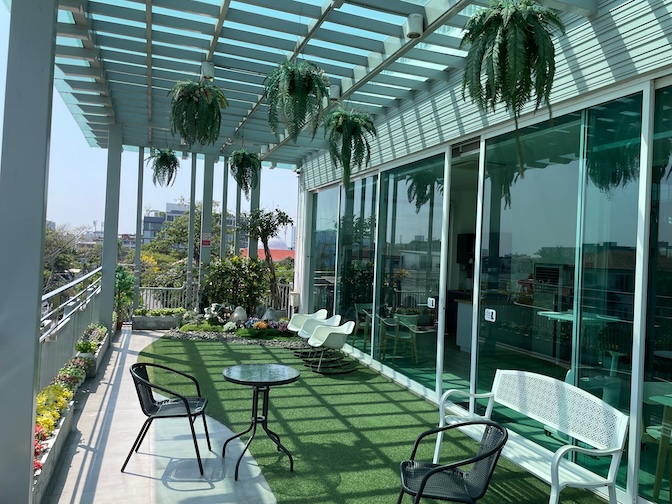
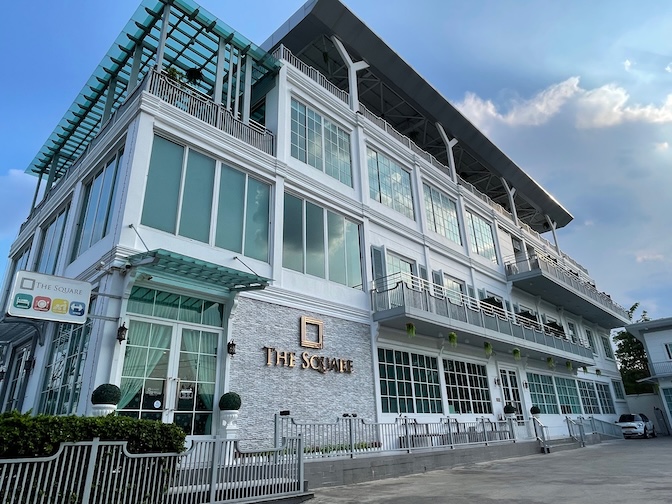
When you first walk into the room at The Square 101 you'll think it looks really nice. Unfortunately that sentiment is short-lived.
Samutprakarn Hotel
| Room | 6,866.93 THB |
| Taxes & fees | 1,404.09 THB |
| Cashback (paid after 60 days) | -74.36 THB |
| Total |
8,196.66 THB
(1,170.95 THB per night)
|
Samutprakarn Hotel is in Samut Prakarn, as you might be able to tell from the name, so it's technically not even Bangkok.
My motivation for staying here was that anywhere remotely close to the centre of Bangkok feels nothing like Thailand nowadays. Everything's in English and there are more foreigners than locals, which just isn't what I'm looking for. Staying in Samut Prakarn fixes that problem.
There aren't many foreigners this far out and there's very little English. Staying here I actually got to speak Thai when I went out. It feels more like a town in Isaan than it does Bangkok. But sadly, that's about where the positives end.
Samutprakarn Hotel is right next to Pak Nam BTS station, which gets you into Bangkok city centre in about 40 minutes. However, when the biggest positive you can say about an area is how easy it is to leave, that should tell you something. I found very little of interest to me in the area around the hotel, and it's so far out that Grab doesn't deliver from restaurants even in Udom Suk.
I very much regretted staying in this area, and in future will put up with the tourists and English everywhere just to be closer to the city centre. And that's before I even talk about the hotel itself, which I didn't really like.
I got off to a very bad start when I walked in and nobody was manning reception, and nor is there a bell or anything to call anyone. Tired after a day travelling, I was standing there for what felt like several minutes getting more and more irate, when a guy that had been stood next to reception the entire time having a private conversation stepped back there and said to me "sorry to keep you waiting."
He'd seen me walk in so I'd assumed he didn't actually work there, but apparently in this hotel it's just not very important for receptionists to pay attention to anyone waiting at reception.
That got my goat up, and things didn't really get better from there. I found this hotel consistently annoying.
For example, I was staying on the third floor. The gym is on the second floor. Yet they lock the doors connecting each floor, meaning you have to take the lift. As the housekeepers use the lift too, it means that you can be waiting for a couple of minutes. And if you're having a stressful day and are short of time, like if you want to get on the treadmill for 30 minutes on your lunch break while working, having to wait for the lift for two minutes just because some prick's decided that guests shouldn't be able to walk between floors, will drive you fucking mad. It doesn't bode well for fire safety either.
That's just one example of how this hotel is just very badly designed. Another is that people in adjacent buildings could see in through all the windows in my room, yet the only curtains are blackout curtains - there are no drapes. So either you have no privacy, or you're constantly in the dark. Great.
The rooms get quite stuffy too, so you're going to want to have the windows open some of the time, even with the AC on. But none of the windows have screens, so I hope you like bugs.
There were two huge TVs in my room, but these too had been poorly designed, where just to connect-up my Apple TV I had to take the TV in the living room completely off the wall, only to find that the plug behind the TV was positioned so that with my Apple TV plugged-in, it couldn't actually sit flat against the wall. I ended up giving up and just using my iPad.
But honestly the worst thing about this room, is I've never stayed in a room with such bad humidity. At certain times the tile flooring was literally sopping wet. My guess is that the person in the room below had the AC on cold a lot of the time which was cooling the tiles of my floor. The upshot was that unless I kept the temperature in my room just as cold, the floor was consistently wet with condensation.
I left after a week at this hotel with a pretty bad cold, and I think the reason is I had to have the AC so low all the time just to keep the floors dry.
It is a hotel that was designed by people that have absolutely no competence in designing hotels, because there are so many flaws in this place.
The positives are that the room is pretty spacious, the wifi is stable, the housekeeping staff are all really friendly and do a good job, and there's a 7-11 right across the street. But that doesn't even come close to negating the many, many flaws of the hotel itself, as well as the drab area it's located in. I do not recommend staying here.
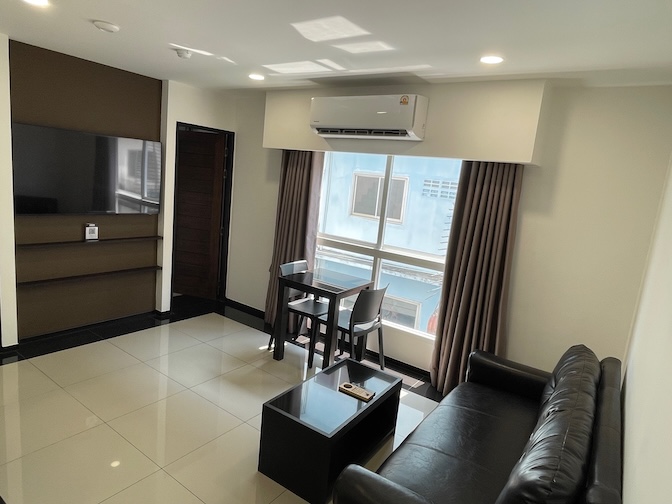
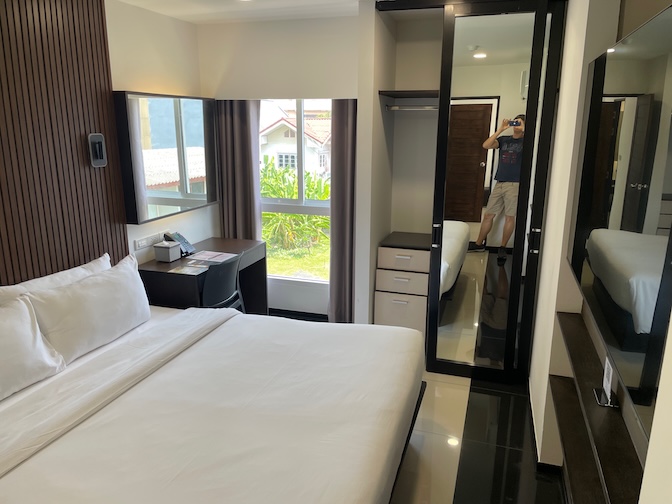
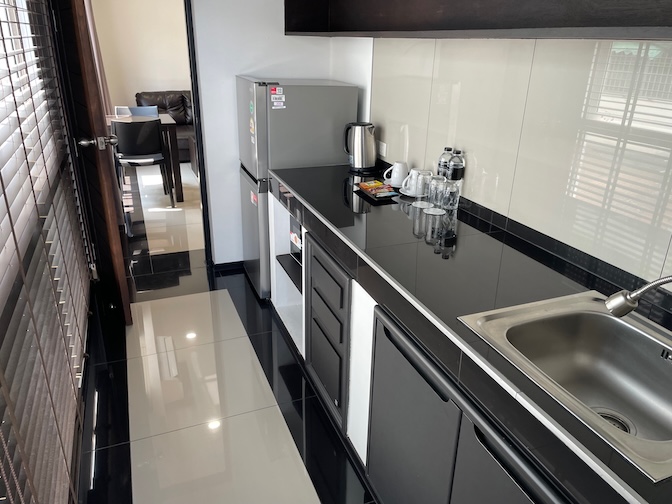
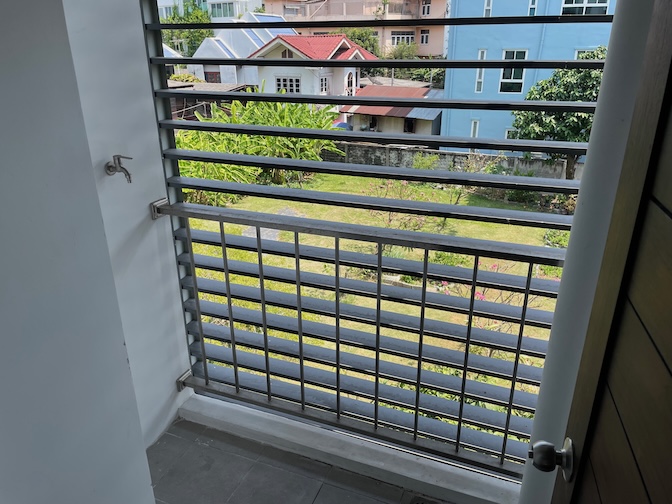
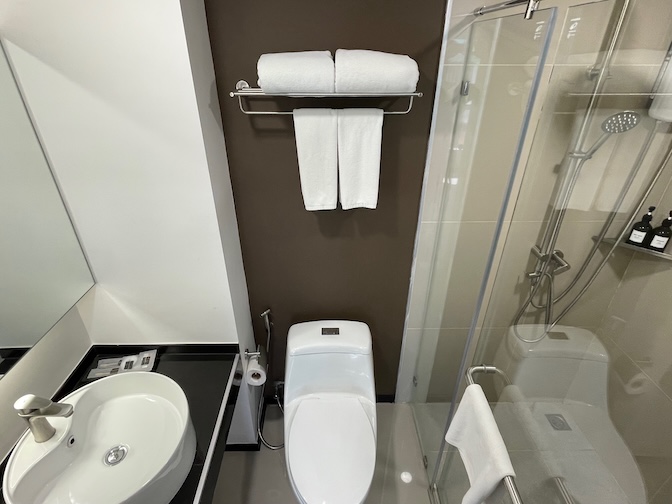
The living room is a decent size - you have plenty of space to exercise here. Note the tile flooring though. It's a magnet for humidity and gets genuinely wet if you don't keep the AC down cold enough. Also note the building opposite. Either you're closing the blackout curtains and living in the dark, or you're in full view of them.
Summary of Bangkok
Do I want to come back again?
If I'd been asked that two years ago, I'd have given an unequivocal 'yes'. For many years Bangkok was my favourite place in the world, and the main focus of my trips to Thailand. Lately though, it's lost its shine.
There are too many tourists, and the central areas of the city are becoming very generic and are losing what made Bangkok Bangkok to begin with. And while you can still get a more local lifestyle if you head out of the city centre, my question would be why bother? If you want a local lifestyle you can find it in many cities in Thailand without having to steer clear of the city centre.
As I have a five-year Thai visa and as Bangkok is the travel hub of Thailand, I can say with near-certainty that I will be back in Bangkok many more times. I definitely don't look forward to it like I used to though.